Kategori: Global Automotive

PistonKafalar’s Global Automotive section delivers the latest car news, EV trends, concept reveals, and performance updates from around the world. It brings a unique perspective on innovation, design, and driving culture — all from Turkey’s trusted voice in car journalism.

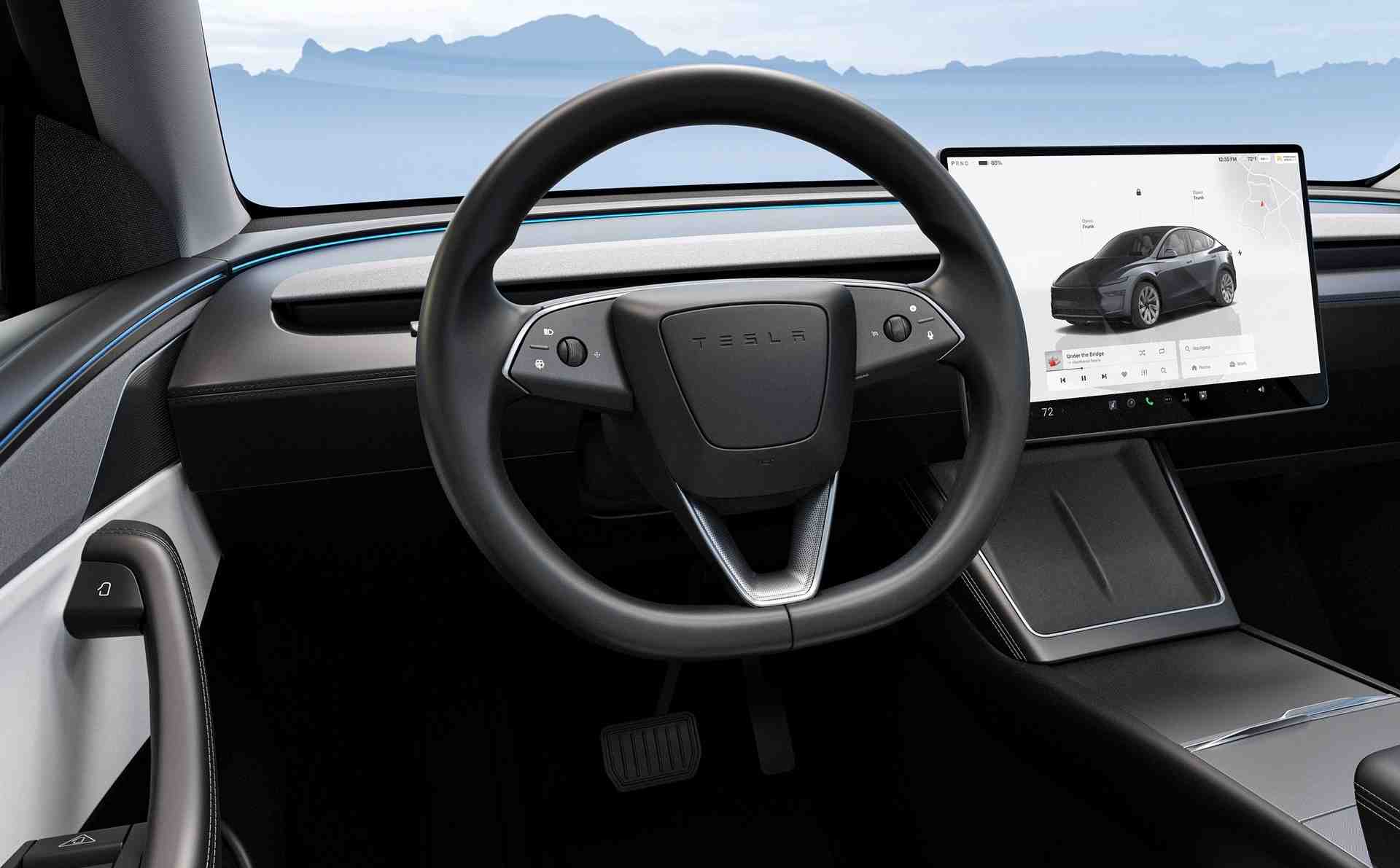
  • Tesla Tests Apple CarPlay Support for the First Time

    Tesla Tests Apple CarPlay Support for the First Time

    Tesla is reportedly testing Apple CarPlay in internal development vehicles. Here’s what the new feature may mean for EV buyers and Tesla’s global strategy.

    Tesla Apple CarPlay Support: A Major Shift in Strategy

    For years, Tesla resisted Apple CarPlay, insisting its in-house infotainment ecosystem provided a better, more integrated user experience. Now, for the first time, reliable sources indicate the automaker is actively developing and testing Tesla Apple CarPlay support in internal development vehicles a move that could reshape the driving experience for millions of Tesla owners worldwide.

    According to a Bloomberg report citing internal sources, Tesla engineers are validating a CarPlay interface that will run alongside Tesla’s native OS, not replace it. While the brand will not implement Android Auto, and has no plans to adopt Apple’s full-screen CarPlay Ultra, even partial support represents the biggest software policy change in Tesla’s history.

    Tesla’s strategy has always centered on complete vertical control hardware, software, UI, navigation, and updates all built in-house. That makes this shift particularly noteworthy.


    What Tesla Apple CarPlay Might Look Like

    Not Full-Screen — But Fully Functional

    Sources claim CarPlay will not take over the entire infotainment screen. Instead, Tesla plans to allocate a dedicated section of the display for CarPlay, enabling users to run:

    • Apple Maps
    • Google Maps
    • Waze
    • Music & Podcast apps
    • Messaging & calls

    Because Tesla deeply integrates climate controls, media, vehicle settings, and range tools into its own UI, giving CarPlay full-screen access was never realistic especially on the massive 15–17 inch central displays.

    What It Won’t Replace

    Drivers using Full Self-Driving (Supervised) must still enter destinations via Tesla Navigation. CarPlay navigation will support turn-by-turn instructions only not full map routing for FSD.

    This limitation is expected and aligns with other EVs that restrict third-party navigation during semi-autonomous driving.


    Why Tesla Needs Apple CarPlay Now

    Tesla’s global sales momentum has slowed. While still America’s bestselling EV brand, Tesla fell behind BYD in global sales in 2024 and continues to face:

    • Rising competition from China and Europe
    • Aging model lineup (Model S, X, 3 and Y all years old)
    • Slowing demand in EU markets
    • Brand-image volatility surrounding Elon Musk

    Adding Tesla Apple CarPlay could:

    • Improve owner satisfaction
    • Retain long-time Tesla drivers
    • Appeal to luxury buyers used to CarPlay ecosystems
    • Reduce switching to Apple-friendly competitors (BMW, Mercedes-Benz, Volvo, Kia, Hyundai)

    This is becoming increasingly important as EV alternatives mature rapidly.


    Industry Impact: Will Others Follow Tesla?

    If Tesla integrates CarPlay, other CarPlay-resistant automakers may feel pressured. Today, only a handful of major brands refuse smartphone mirroring:

    • Rivian (no CarPlay/Android Auto, argues native UI is better)
    • General Motors (dropping CarPlay from new EVs and even new combustion models)

    GM argues CarPlay harms consistency and limits monetization opportunities particularly subscription-based infotainment services. Tesla is making the opposite bet: that customer satisfaction matters more than forcing adoption of in-house systems.


    When Will Tesla Apple CarPlay Arrive?

    No launch timeline is confirmed. Bloomberg’s sources suggest:

    • Internal testing is ongoing now
    • Public release could come in the next few months
    • Tesla may still cancel the project before launch

    Given Tesla’s unpredictable software roadmap, owners should remain cautiously optimistic.


    PistonKafalar Comment

    Tesla opening the door to Apple’s ecosystem marks a turning point in the EV software landscape. The brand built its identity on absolute system control, so the move toward CarPlay signals a willingness to adapt to user expectations especially as competition tightens. If Tesla launches this update globally, it may set a new standard for EV UX flexibility.
  • Bentley Supersports: The Most Driver-Focused Continental GT Ever

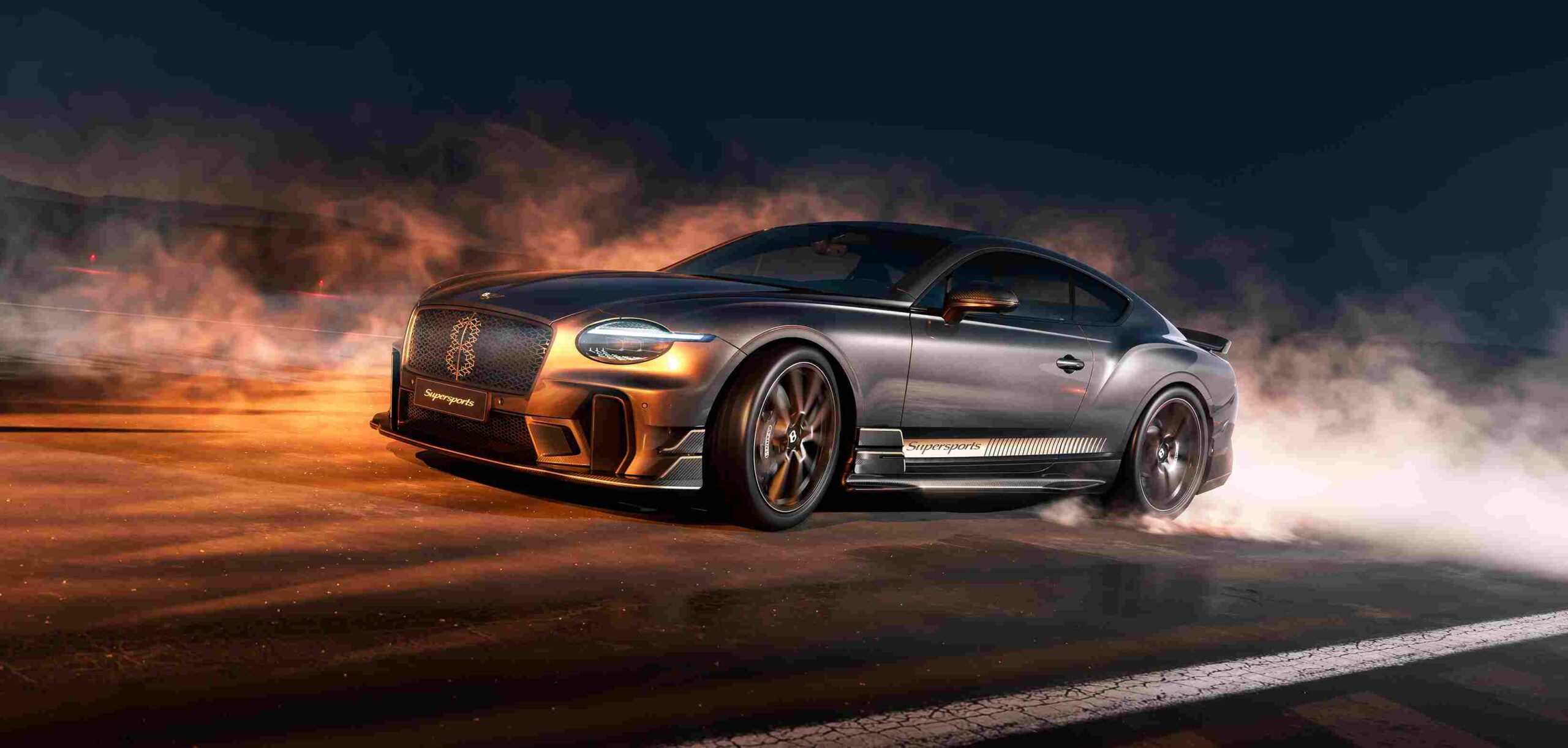
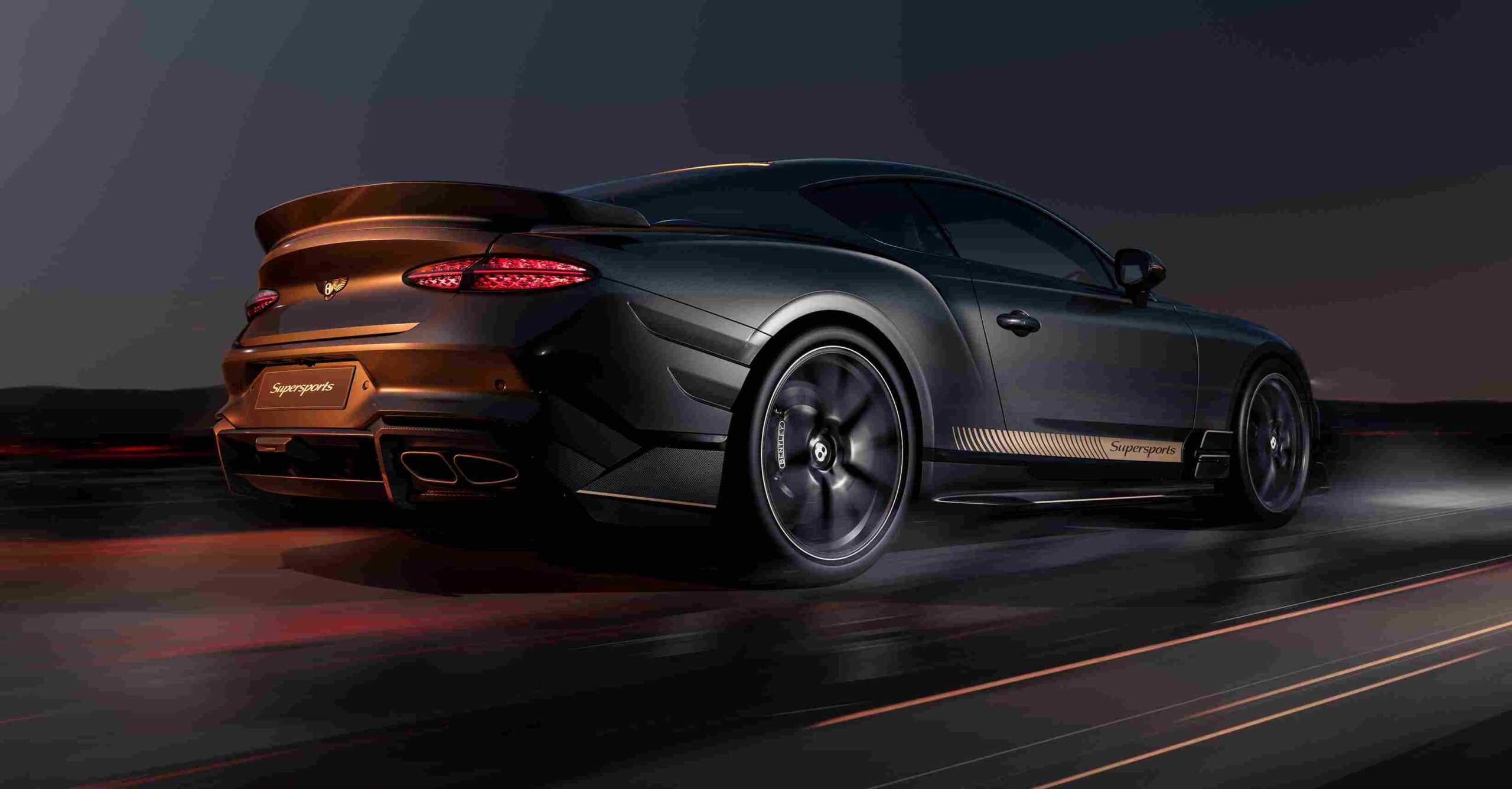
    Bentley Supersports: The Most Driver-Focused Continental GT Ever

    Celebrating 100 years since the first “Super Sports,” Bentley unveils the new Continental GT Supersports a 666 PS, rear-wheel-drive masterpiece focused purely on the thrill of driving.

    A Century-Old Legacy, Reimagined

    One hundred years after the debut of the original 1925 “Super Sports,” Bentley revives its most evocative nameplate for the fourth time. The new Continental GT Supersports is not only the lightest and most agile Bentley of the modern era but also the first rear-wheel-drive Continental GT ever built.

    Strictly limited to 500 individually numbered examples, the Supersports combines a 666 PS (657 bhp) twin-turbo V8, rear-wheel drive and a curb weight below two tonnes a configuration designed entirely around driver engagement rather than outright top speed.

    Bentley CEO Dr Frank-Steffen Walliser described it as “the most daring Bentley yet a return to the brand’s boldest spirit, blending sculptural craftsmanship with true mechanical purity.”

    666 PS and 800 Nm: A New Power Benchmark

    At the heart of the Supersports lies an extensively re-engineered 4.0-litre twin-turbo V8. With a strengthened crankcase, uprated cylinder heads and larger turbochargers, the engine delivers 800 Nm of torque, channeled to the rear wheels through an eight-speed dual-clutch transmission.

    Acceleration from 0–100 km/h (62 mph) takes 3.7 seconds, while top speed stands at 310 km/h (192 mph). The engine breathes through a full-length Akrapovič titanium exhaust system, tuned for an authentic, unfiltered cross-plane V8 soundtrack free from artificial sound enhancement.

    The Lightest Bentley in 85 Years

    The new Supersports weighs under 2000 kg, nearly half a tonne lighter than a Continental GT Speed. Weight reduction extends to a carbon-fibre roof, deleted rear seats, reduced sound insulation and the removal of non-essential driver-assist systems.

    Aerodynamics follow a “form-follows-function” philosophy: a massive front splitter, carbon dive planes, fender blades, side sills and a fixed rear wing combine to generate 300 kg more downforce than the GT Speed.

    Developed with Manthey Racing, the forged 22-inch wheels are wrapped in optional Pirelli Trofeo RS tyres, boosting cornering performance by 30 % and achieving 1.3 g of lateral grip.

    Project Mildred: Inspired by a Record-Breaking Woman

    The Supersports project began in September 2024 under the codename “Project Mildred.” A small team of engineers secretly developed a prototype to explore how a sub-two-tonne, rear-drive Continental GT might perform.

    The name honors Mildred Mary Petre, a pioneering racer who in 1929 drove a Bentley 4½ Litre solo for 24 hours at Montlhéry, averaging 90 mph an extraordinary feat for her time. Her fearless spirit became the guiding inspiration for the new Supersports.

    Racing-Inspired Two-Seat Cabin

    The interior is a study in performance-focused luxury. The two-seat cabin replaces the rear area with a carbon-fibre and leather bulkhead, emphasizing lightness and structural rigidity.

    New lightweight sports seats offer 11-way electric adjustment, enhanced bolstering and integrated carbon elements. Surfaces blend leather, Dinamica microfibre and gloss carbon-fibre veneers, while bespoke embroidery and numbered plaques underline exclusivity.

    Each Supersports will be individually numbered and crafted by hand at Bentley’s Crewe headquarters.

    Design Themes: Nightfall & Daybreak

    Bentley’s design team created two striking themes:

    • Nightfall: Anthracite Gloss exterior with Camel lower striping and Bronze cabin accents.
    • Daybreak: Jetstream Matte with Arctica and Portofino highlights, paired with a Damson interior featuring Light Blue and Pillar Box Red accents.

    Customers can choose from 24 exterior paints, 22 main hides, and a new tri-tone interior option unprecedented in a Bentley road car.

    Production Timeline

    The new Supersports will make its cinematic debut in Dubai in January 2026, with orders opening in March and production commencing Q4 2026. Deliveries will begin in early 2027 across select global markets including the UK, Europe, the USA, Canada, Australia, New Zealand, and the Middle East.


    Piston Heads Comment

    With the Supersports, Bentley bridges heritage and hardcore performance like never before. A rear-drive chassis, 666 PS of raw power and the lightest construction since pre-war Bentleys make it a modern purist’s GT not just a luxury car, but a declaration that Bentley still knows how to thrill the driver.

    For detailed information about the brand, you can visit Bentley’s official website.

  • Leadership Change at Lamborghini: Umberto Tossini Steps Down After Nearly Two Decades

    Leadership Change at Lamborghini: Umberto Tossini Steps Down After Nearly Two Decades

    Automobili Lamborghini announces the departure of Umberto Tossini, Chief People, Culture and Organization Officer, marking the end of a 19-year tenure that shaped the company’s modern growth.

    End of an Era in Lamborghini’s Leadership

    Sant’Agata Bolognese, Italy – Automobili Lamborghini has announced that Umberto Tossini is stepping down from his position as Chief People, Culture and Organization Officer to pursue new professional opportunities.

    Tossini joined the Italian supercar manufacturer in 2006 as Human Resources Director and played a pivotal role in shaping Lamborghini’s organizational and cultural evolution. Over nearly two decades, he contributed to some of the brand’s most significant milestones, including the localization and production launch of the Super SUV Urus at the Sant’Agata Bolognese facility — a project that became a benchmark for regional industrial investment.

    He was also instrumental in the creation of DESI (Dual Education System Italy), the country’s first dual vocational training program, which celebrated its 10th anniversary in 2025. More recently, Tossini worked closely with the HR team on renewing Lamborghini’s supplementary labor agreement, recognized as a model of innovation in labor relations and working time reorganization.

    Under Tossini’s leadership, Lamborghini’s workforce grew from a few hundred employees to over 3,000, driven by a culture focused on human value, inclusion, and long-term sustainability. His people-centric approach contributed to Lamborghini receiving the Top Employer certification for twelve consecutive years.

    The company expressed gratitude for Tossini’s contributions, noting his impact on aligning technological innovation with social progress across the brand’s operations.

    The role of Chief People, Culture and Organization Officer will be temporarily overseen by Stephan Winkelmann, Chairman and CEO of Automobili Lamborghini, until a successor is officially appointed.

  • All New Honda NSX by Pininfarina and JAS Motorsport: The Legend Reborn

    All New Honda NSX by Pininfarina and JAS Motorsport: The Legend Reborn

    Pininfarina and JAS Motorsport are reimagining the 1990s Honda NSX with a carbon-fiber body, upgraded V6, and manual gearbox. A legend reborn for 2026.

    The Japanese icon returns reimagined in Italy.
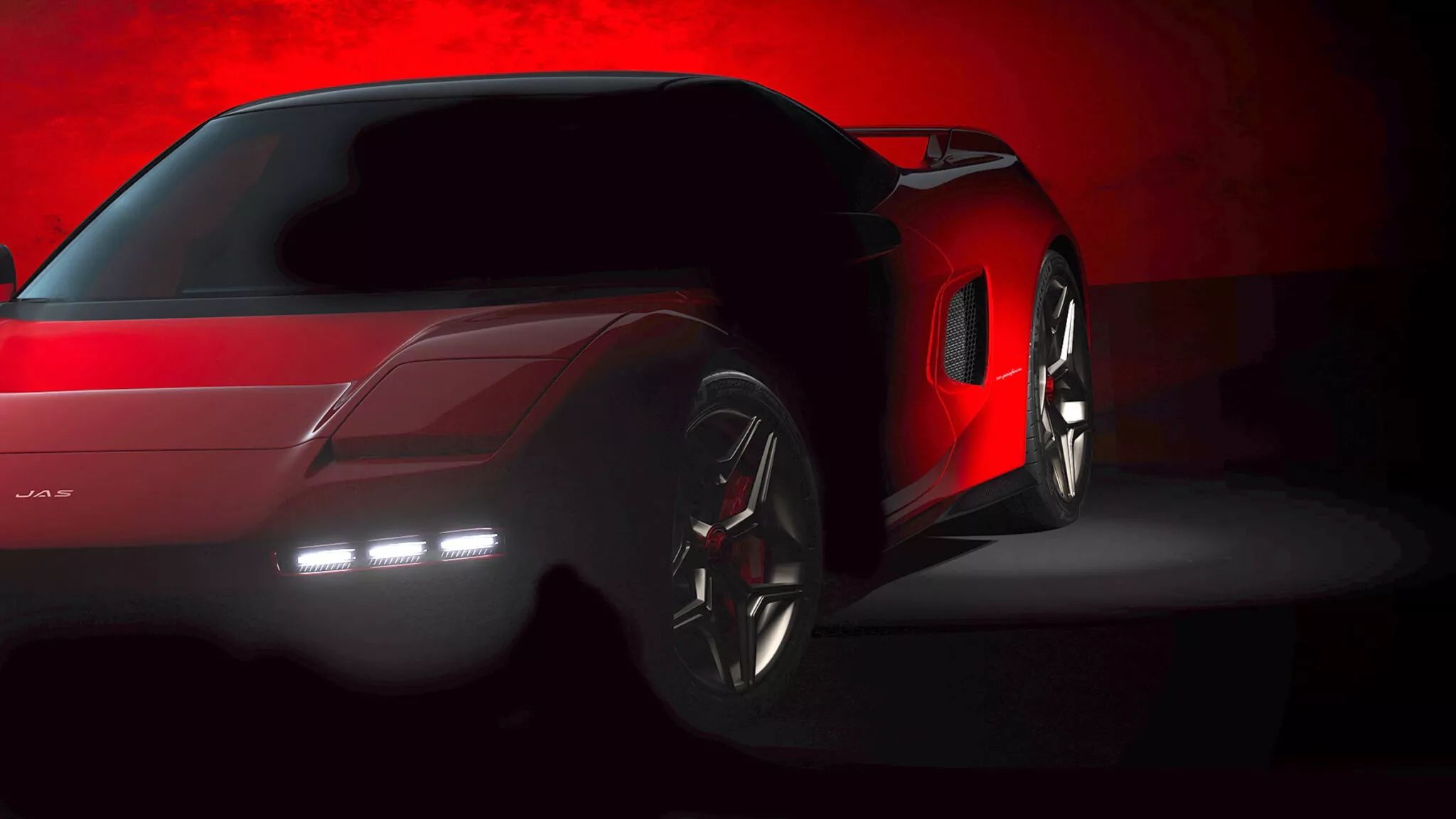
    Pininfarina and JAS Motorsport have joined forces to resurrect one of the most celebrated Japanese supercars of all time: the first generation Honda NSX. This restomod project blends Italian craftsmanship with Japanese engineering purity, bringing the spirit of the 1990s into the modern era.

    Recreating a Classic

    The original Honda NSX, launched in 1990, was a revolution in its time the world’s first all-aluminum production supercar and a benchmark for driver-focused design. Now, more than three decades later, Pininfarina, the legendary Italian design house, and JAS Motorsport, Honda’s long-time racing partner, are reimagining it with a new purpose: to build the ultimate modern analogue supercar.

    The new Honda NSX will be built using original NA1 chassis from the early 1990s, reconstructed and re-bodied with full carbon fiber panels. Inside, the cabin retains the minimalist cockpit layout of the original car but integrates premium materials, Alcantara, and a driver-centric setup inspired by modern GTs.

    Old Soul, New Technology

    This reborn Honda NSX keeps the naturally aspirated V6 engine, meticulously upgraded by JAS Motorsport for more power, torque, and responsiveness. The powertrain remains pure and mechanical, coupled to a six-speed manual transmission sending power to the rear wheels a deliberate rejection of digital overengineering.

    Pininfarina’s design honors the iconic HP-X Concept it designed for Honda in 1984 the car that inspired the very first Honda NSX. Classic elements like pop-up headlights, the black canopy roof, and the signature hoop spoiler remain, but the stance is now wider and more muscular. New vents on the hood, expanded intakes, and swollen fenders give the car a sharper, more planted aesthetic while improving aerodynamics and cooling efficiency.

    JAS Motorsport Precision

    On the technical side, JAS Motorsport brings decades of Honda racing expertise from touring cars and GT programs. Every unit will be hand-built, with both left- and right-hand-drive options available. Chassis geometry, suspension setup, and braking systems are tuned to balance track performance and road comfort, maintaining the NSX’s original ethos “human-centered perfection.”

    According to JAS Motorsport, the goal is to deliver “a modern reinterpretation of Grand Touring spirit high performance, balanced, safe, yet effortlessly usable on any road.”

    A Tribute to Senna’s Legacy

    The NSX was famously developed with input from Ayrton Senna, and this project honors that heritage. By preserving the tactile connection between car and driver, this new NSX restomod represents the last frontier of analogue driving in an increasingly digital world.

    Launch Timeline

    The yet-unnamed NSX restomod will make its global debut in the first half of 2026. Production numbers are expected to be extremely limited, and pricing will reflect its handcrafted nature and collector-grade exclusivity.

    PistonKafalar Comment

    This collaboration between Pininfarina and JAS Motorsport is far more than a nostalgic restomod it’s a statement. In an era where performance cars are defined by algorithms and driver aids, this manual, naturally aspirated, rear-wheel-drive machine reminds us of the art of driving. It’s a love letter to mechanical purity a bold reminder that passion and precision still matter.

    For more stories from our Global Automotive section, click HERE.

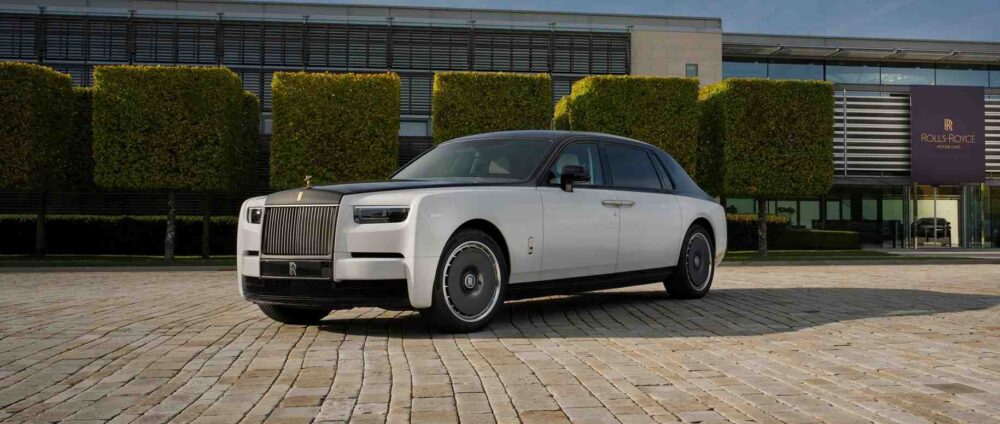
  • Rolls-Royce Celebrates 100 Years of Phantom with a Golden Masterpiece

    Rolls-Royce Celebrates 100 Years of Phantom with a Golden Masterpiece

    The Phantom Centenary Private Collection blends art, heritage, and engineering perfection in 25 exclusive cars.

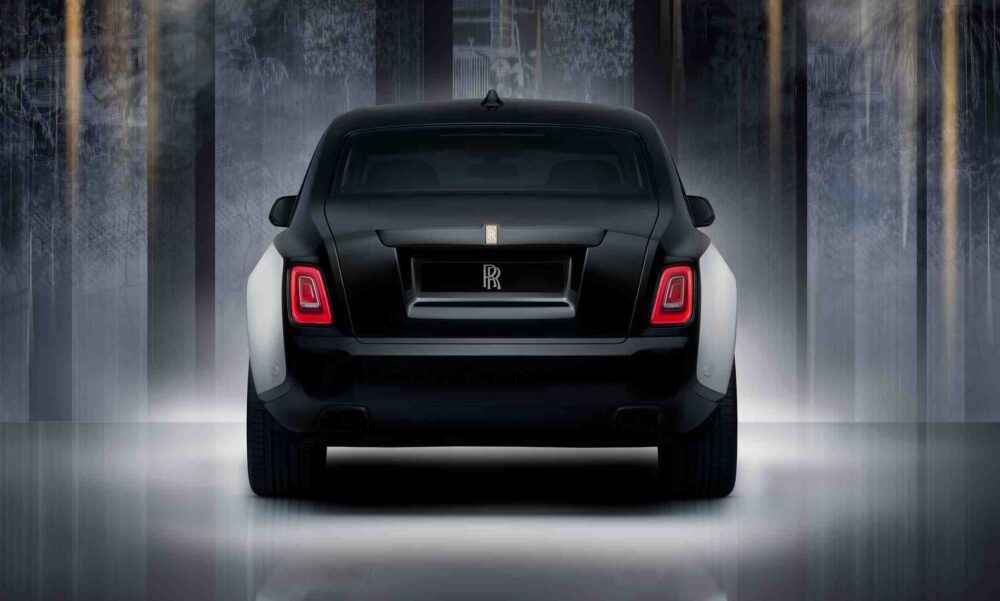
    The Rolls-Royce Phantom Centenary Private Collection marks 100 years of timeless luxury. Limited to just 25 masterpieces, it redefines bespoke craftsmanship with golden artistry.

    A Century of Greatness, Reimagined in Gold

    Few names command as much reverence in automotive history as Rolls-Royce Phantom. For a century, it has symbolized power, prestige, and the silent authority of excellence.

    Now, Rolls-Royce honors this legacy with the Phantom Centenary Private Collection — a creation so intricate, it took three years and more than 40,000 hours of work by the Bespoke Collective’s most skilled artisans.

    Only 25 units will ever exist. Each one tells the story of Rolls-Royce Phantom’s 100-year journey — from 1925’s opulent debut to today’s modern pinnacle of automotive art.


    Spirit of Ecstasy: A Golden Rebirth

    Standing proudly atop the hood is the most iconic symbol in automotive history — the Spirit of Ecstasy, reborn in 18-carat solid gold and finished with 24-carat plating.
    Stamped with a special “Phantom Centenary” hallmark in London’s Assay Office, the figurine radiates a warm brilliance that sets the tone for the entire car.

    For the first time in Rolls-Royce history, every emblem — front, rear, and sides — is rendered in 24-carat gold and white enamel. Each wheel carries 25 delicate lines to honor the 25 cars in the collection, forming 100 lines in total — a subtle yet powerful tribute to a century of elegance.


    Exterior: The Hollywood Glow of Arctic White and Champagne

    The two-tone exterior, finished in Arctic White and Super Champagne Crystal, captures the aura of 1930s Phantom silhouettes. The shimmering paint contains microscopic champagne-tinted glass particles, producing a deep metallic brilliance that glows like liquid gold under sunlight.

    This visual poetry recalls the glamour of Hollywood’s golden age — when Phantom ferried movie legends to premieres beneath flashbulbs and velvet ropes.


    Inside: Where Luxury Becomes Literature

    Step inside, and the cabin reveals an atmosphere closer to an art gallery than an automobile.
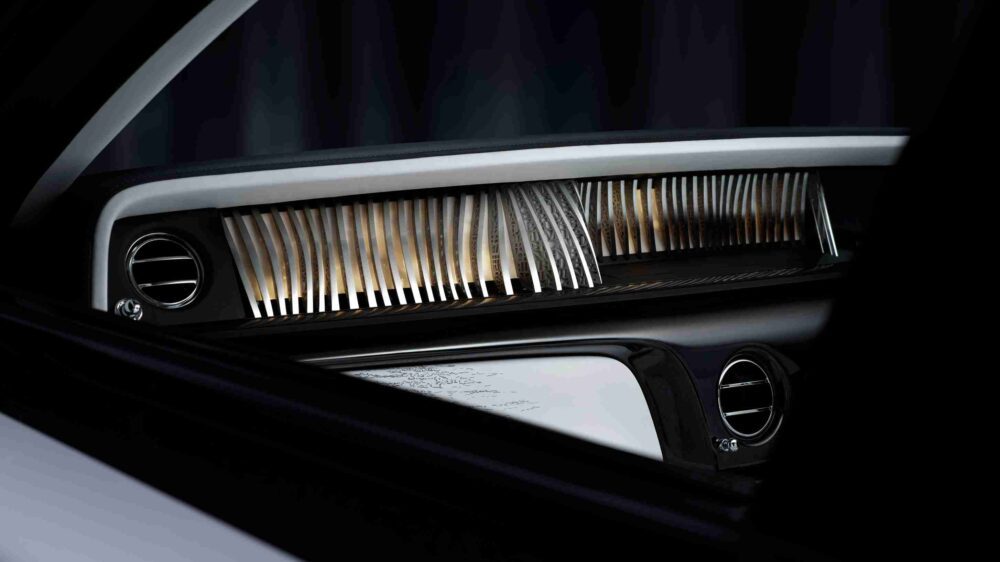
    At its heart lies the Anthology Gallery — a stunning display of 50 vertically brushed aluminum “wings,” 3D-printed and arranged like the open pages of a book.

    Each wing bears engraved quotes and media headlines celebrating Rolls-Royce Phantom’s century-long presence in culture and innovation. As light dances across their edges, the reflections create a hypnotic, firework-like effect — a visual metaphor for a hundred years of brilliance.

    Every quote was carefully curated after 100 hours of archival research, transforming this gallery into a museum of motion.


    The Golden Threads of Time

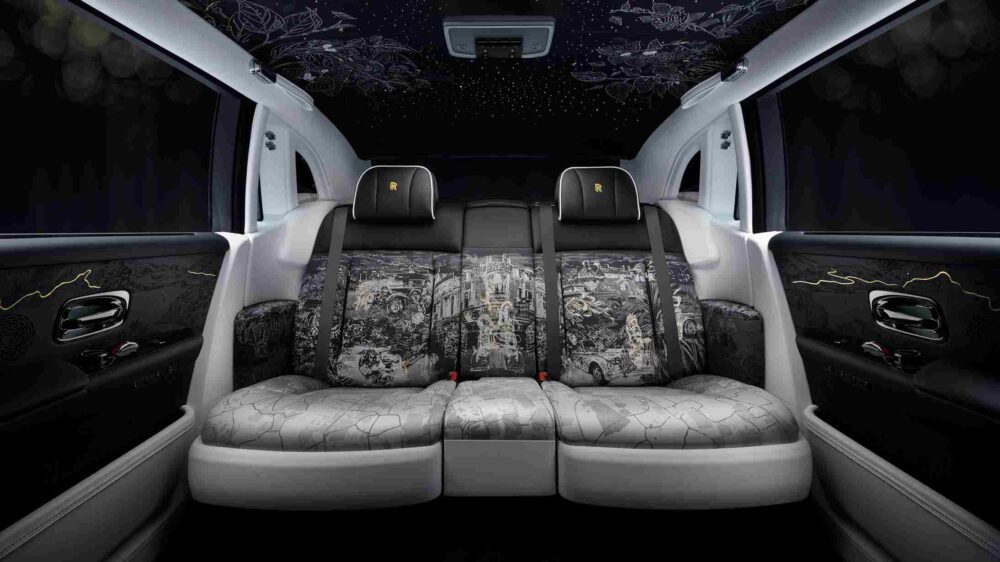
    Phantom’s rear seats are upholstered in couture-grade woven fabric — developed in collaboration with a European fashion house over 12 months. The textile features high-resolution prints, gold-sand threads, and over 160,000 individual stitches. Each motif depicts landmarks in Phantom’s history, from London’s Conduit Street to Sir Henry Royce’s coastal retreats in the South of France.

    The embroidery technique, described by the designers as “sketching with thread,” gives each pattern a hand-drawn depth. Every motif — from galloping horses to archival signatures — was redrawn digitally up to 24 times before approval.
    It’s not simply upholstery; it’s storytelling through fiber and light.


    Front Cabin: Where Art Meets Engineering

    The front seats feature laser-etched leather panels — a first in Rolls-Royce history.
    Etched into the surface are symbolic designs referencing Phantom’s legendary codenames:

    • Roger Rabbit” (2003 Phantom relaunch project)
    • Seagull” (1923 Phantom I prototype)
    • Bluebird” (Sir Malcolm Campbell’s record-breaking Phantom II)

    Each motif is delicately applied through variable-intensity laser engraving to achieve tonal harmony between the ink-black outlines and the creamy white hides.


    The Art of Wood: Mapping a Century

    The door panels are nothing short of sculpture. Using black-stained wood veneers, artisans created intricate scenes that map Phantom’s most symbolic journeys — from Goodwood to Le Rayol-Canadel-sur-Mer. Each element combines 3D marquetry, laser engraving, and 24-carat gold leaf, with certain routes marked by golden lines only 0.1 micrometers thick.

    Even Sir Henry Royce’s personal homes — Villa Mimosa and Elmstead — are pinpointed by a single speck of gold leaf, just 2.76 mm wide. In total, each set of doors requires 50 individual veneer components and takes four weeks to complete.


    Under a Starlit Sky

    Above the passengers glows perhaps the most poetic feature: the Starlight Headliner, crafted with 440,000 stitches forming a celestial tapestry. The design was inspired by a 1920s photograph of Sir Henry Royce and his colleagues under a mulberry tree in West Wittering. Look closely, and you’ll see the trees of Goodwood, golden bees representing the marque’s hives, and even the Phantom Rose, a flower bred exclusively for Rolls-Royce.

    One star cluster pays tribute to Sir Malcolm Campbell’s “Bluebird,” forever linking Phantom’s spirit to the pursuit of speed and perfection.


    Power, Gilded

    Beneath the Arctic White bonnet rests the legendary 6.75-liter V12, framed by gold-accented covers.
    It’s not just a mechanical masterpiece; it’s the heart of a century-old dream, built on the same obsession for refinement that defined Sir Henry Royce’s philosophy:

    “Strive for perfection in everything you do.”


    The Designer’s Voice

    Chris Brownridge, Chief Executive Officer of Rolls-Royce Motor Cars, described the project with reverence:

    “This car reflects the same spirit that inspired the very first Phantom — the relentless pursuit of excellence.
    It is not simply built; it is composed, like a symphony in gold.”


    Legacy in Motion

    Each Phantom Centenary bears a commemorative plate engraved “Phantom – 100 Years – Since 1925”. Even the dust cover carries gold embroidery matching the car’s interior stitching.

    Owning one of these 25 masterpieces means possessing a tangible fragment of automotive eternity — where history, craftsmanship, and art converge.


    Piston Kafalar Comment

    The Rolls-Royce Phantom Centenary Private Collection transcends the idea of transportation.
    It’s a golden manuscript written in wood, leather, and light — proof that in the age of technology, true luxury is still handmade.

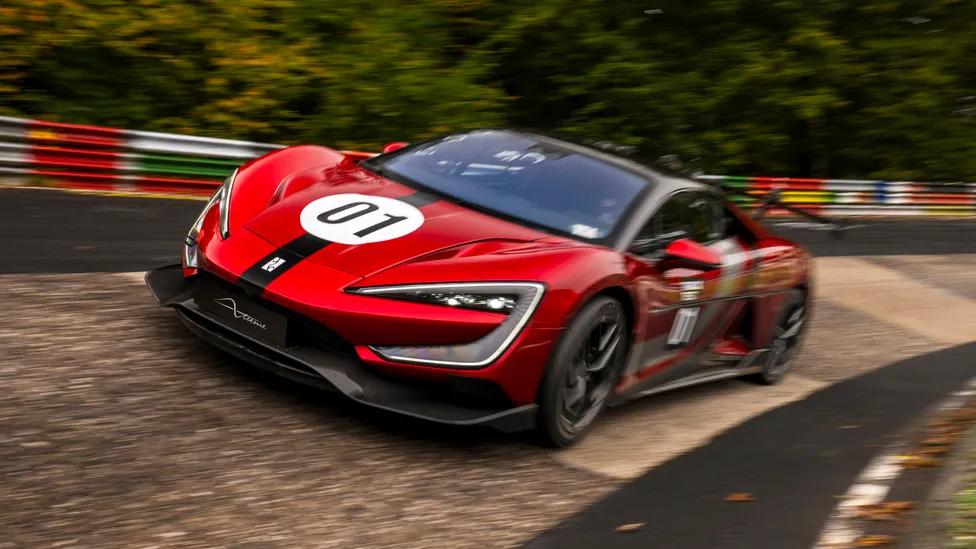
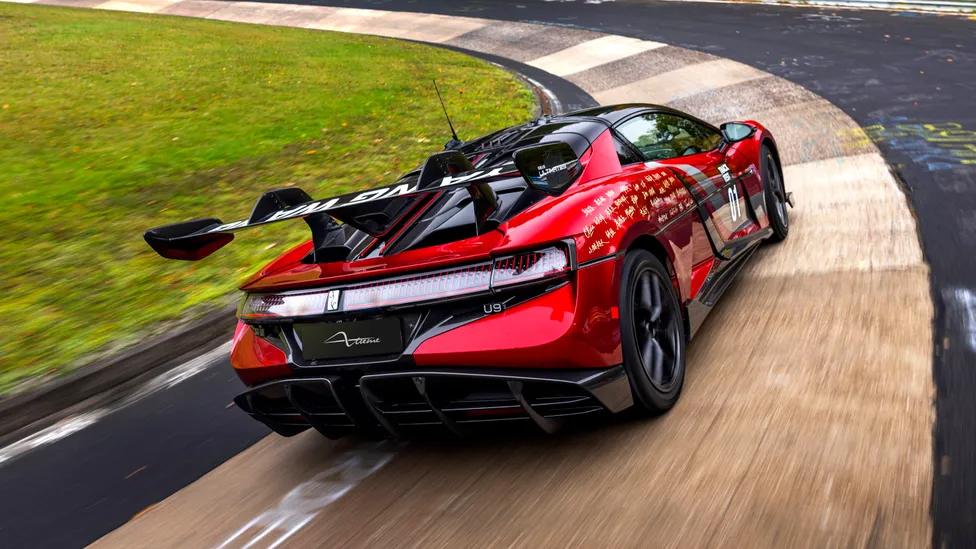
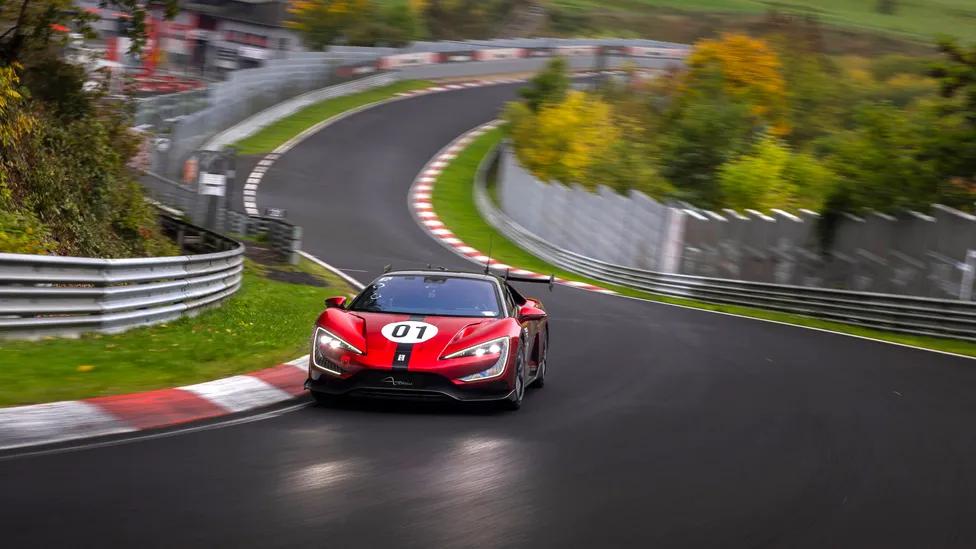
  • 6:59.157! Yangwang U9 Xtreme Becomes the Fastest Electric Sports Car on the Nürburgring

    6:59.157! Yangwang U9 Xtreme Becomes the Fastest Electric Sports Car on the Nürburgring

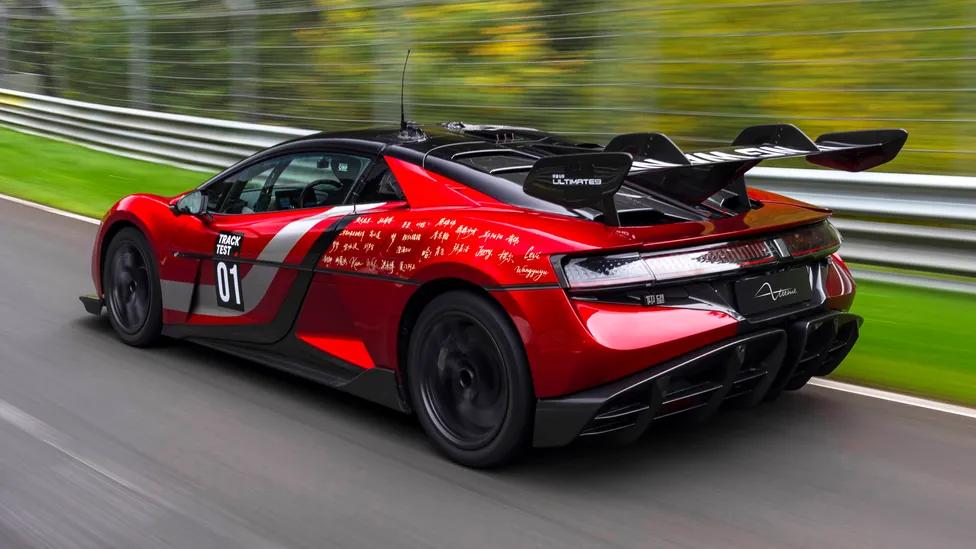
    The Yangwang U9 Xtreme sets a stunning Nürburgring Nordschleife record of 6:59.157, beating the Xiaomi SU7 Ultra to become the fastest production electric sports car ever.

    A New Reign in the Electric Speed Era

    The hierarchy of high-performance EVs has shifted again. Chinese manufacturer Yangwang has rewritten Nürburgring history with its flagship model, the U9 Xtreme, clocking a breathtaking lap time of 6 minutes 59.157 seconds on the legendary Nordschleife.

    This achievement dethrones the Xiaomi SU7 Ultra, which previously held the title at 7 minutes 04.957 seconds — a full five-second margin on one of the most demanding 20.8 km tracks in the world. It marks a milestone moment in the rapidly evolving rivalry among China’s new-generation performance brands.


    300 mph Ambition: The Electric Rocket

    The Nürburgring run was not just a demonstration of brute speed but also a showcase of Yangwang’s engineering ambition. On the track’s punishing mix of corners and elevation changes, the U9 Xtreme maintained extraordinary average pace while staying composed.

    According to the company, the car has the potential to reach a staggering 308 mph (≈ 495 km/h) — placing it among the fastest electric vehicles ever conceived.

    Since July 2024, Yangwang has been conducting development sessions at the ’Ring, feeding telemetry into its intelligent control system to fine-tune power distribution and thermal management. The goal was never just to beat Xiaomi — it was to redefine what an electric supercar can achieve on the world’s toughest circuit.


    Behind the Wheel: Moritz Kranz

    At the controls for the record attempt was seasoned German racer Moritz Kranz, a driver with over 60 victories across GT4, GT3 and LMP3 categories.

    The car he piloted remained fundamentally a production U9 Xtreme, though it received minor track-oriented upgrades:

    • Next-generation liquid-cooling system preventing heat-induced power drop,
    • Titanium-alloy carbon-ceramic brakes for extreme stopping performance,
    • Semi-slick tires optimized for peak grip through high-speed corners.

    Yangwang emphasized that the car complied fully with production specifications, making this lap officially valid for the “fastest production EV” title.


    Quad-Motor Power: 2,959 hp and 1,200-Volt Architecture

    At the heart of the U9 Xtreme lies a four-motor powertrain producing a combined 2,959 hp (2,205 kW). Each motor spins up to 30,000 rpm and is independently controlled via a 1,200-volt ultra-high-voltage platform.

    This configuration allows micro-second torque vectoring — each wheel receiving the exact power it needs in real time, maximizing traction, balance and cornering stability.

    The result is instant acceleration and razor-sharp agility that blurs the line between digital precision and mechanical control.


    Design: Aggression Meets Refinement

    Visually, the U9 Xtreme looks more like a spacecraft than a traditional supercar. Its low aerodynamic nose, oversized air intakes and carbon-fiber surfacing communicate unfiltered performance intent.

    As the luxury sub-brand of BYD, Yangwang describes this design language as “the fusion of technology and beauty.” It’s a philosophy that extends beyond styling — a statement that performance and aesthetics can coexist in perfect equilibrium.

    Thanks to meticulous aerodynamics, the U9 remains remarkably stable at high speed, proving that form and function truly align in the electric age.


    BYD’s Official Statement

    Stella Li, Vice President of BYD, praised the team’s accomplishment:

    “The limited-production U9 Xtreme proves it’s not only among the world’s fastest cars in a straight line but also capable of record-breaking balance and agility on one of the world’s most complex tracks. This achievement demonstrates how far electric performance has come.”

    The brand also confirmed that the name “Xtreme” is a stylized interpretation of the English word “Extreme” — a fitting badge for such an audacious machine.


    The Electric Throne Battle: Xiaomi vs. Yangwang

    Behind the record lies an ongoing duel between China’s two rising giants. Xiaomi’s SU7 Ultra had previously dominated with a 7:04.957 lap, while a prototype version once posted a blistering 6:22 — but that run didn’t qualify as a production record.

    Now, Yangwang’s 6:59.157 lap gives it official supremacy. With production limited to just 30 units, the U9 Xtreme will soon become one of the most collectible and technically significant electric supercars of its era.

    This battle is more than a rivalry; it’s a reflection of China’s growing confidence in competing head-to-head with traditional European performance brands on their home turf.


    Nürburgring: The Symbol of the Electric Era

    The Nürburgring Nordschleife has long been regarded as the ultimate test of automotive engineering — a proving ground that separates hype from hardware.

    By breaking the seven-minute barrier, the U9 Xtreme proves that electric vehicles are no longer chasing combustion engines — they’re surpassing them. The age of quiet speed is over; this is the era of electrified dominance.

    Piston Kafalar Comment

    Yangwang’s success is more than a headline — it’s a declaration that the electric performance war has truly begun. The U9 Xtreme demonstrates that precision engineering, high-voltage architecture and fearless design can deliver both numbers and emotion.

    While European brands defined Nürburgring supremacy for decades, it’s now clear that China’s innovators have joined the conversation — and they’re speaking in lap records.

    The 6:59 benchmark may soon fall again, but for now, the crown belongs to Yangwang.

    You May Also Like

    🔗 Mercedes Blends Classic Elegance with Future Tech: Vision Iconic Concept Unveiled
    Mercedes-Benz fuses Art Deco heritage with futuristic design in its Vision Iconic Concept — an electric showcase of solar paint, AI lighting and autonomous technology.

    🔗 Ferrari SC40: A One-Off Berlinetta Paying Homage to the Legendary F40
    Ferrari unveils the SC40, a bespoke hybrid one-off built on the 296 GTB platform — a modern tribute to the legendary F40.

    🔗 The Legend Returns: All-Electric Renault 5 Turbo 3E Shines at Tour de Corse with 555 HP
    Renault revives its 1980s icon with the 5 Turbo 3E EV concept — 555 hp, wild rally design, and zero-emission nostalgia.

  • Bentley Black Forest Collection: A Unique Mulliner Series Celebrating 15 Years of Bentley Stuttgart

    Bentley Black Forest Collection: A Unique Mulliner Series Celebrating 15 Years of Bentley Stuttgart

    Bentley Stuttgart celebrates its 15th anniversary with the exclusive Black Forest Regional Collection by Mulliner — a trio of handcrafted models inspired by the beauty and heritage of Germany’s legendary Schwarzwald region.

    15 Years of Bentley Stuttgart: Where Luxury Meets Nature

    Bentley has marked the 15th anniversary of Bentley Stuttgart, one of its most distinguished retailers in Germany, with a truly special collection — the Black Forest Regional Collection. Designed and hand-built by Mulliner, Bentley’s bespoke division, this limited series brings together the essence of the brand with the natural elegance and cultural identity of Germany’s Black Forest (Schwarzwald).

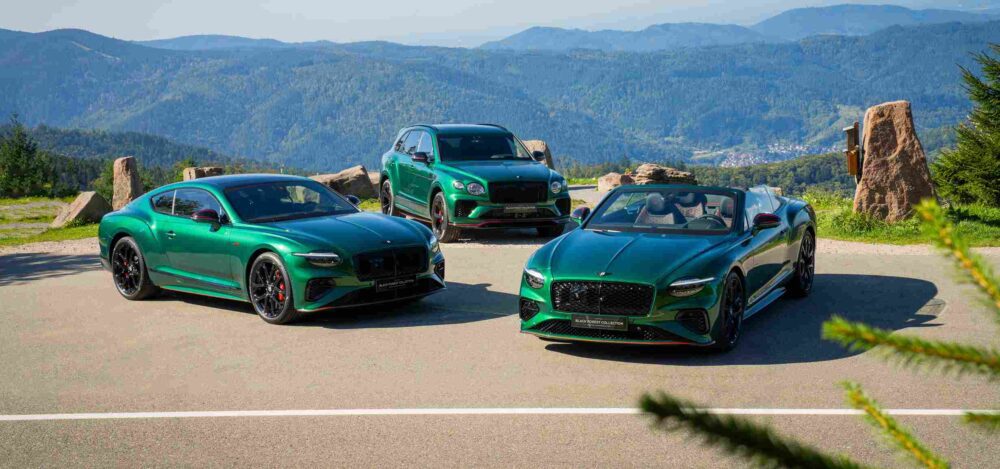
    The Black Forest Collection includes three exclusive models that reinterpret the spirit of grand touring through the lens of nature and craftsmanship:

    • Bentayga S Black Edition
    • Continental GT Speed
    • Continental GTC Speed

    The exclusive event in Stuttgart brought together Bentley’s most loyal clients, collectors, and friends of the brand, celebrating 15 years of success while ushering in a new chapter of Bentley’s journey in Europe.


    The Spirit of the Black Forest: Nature Reimagined in Craftsmanship

    The Black Forest Collection is a showcase of Mulliner’s artisanal excellence — a seamless blend of natural inspiration and British luxury. The exterior is finished in a deep, sophisticated Scarab Green paint, echoing the lush tones of the Black Forest. Each car features a special edition luggage set and illuminated door sills engraved with the “Black Forest” insignia, underlining their bespoke nature.

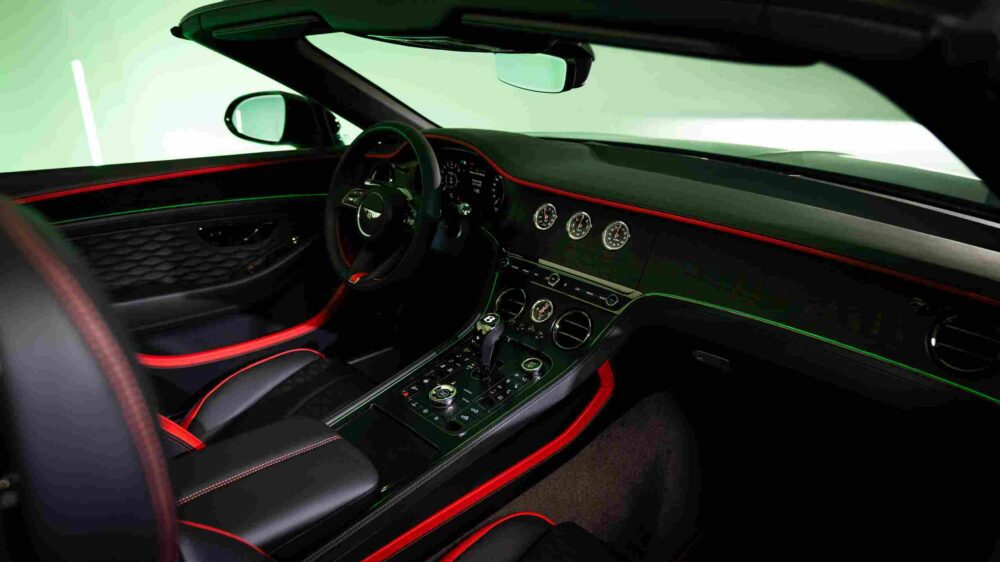
    Inside, open-pore walnut veneers, warm natural leather tones, and contrasting stitching bring the serene harmony of nature into the cabin. Intricate leaf motifs etched into the dashboard and green-red embroidered details on the seats pay homage to the region’s flora and cultural heritage.

    Each detail is a tactile reminder of Bentley’s mastery in merging mechanical precision with artistic craftsmanship — transforming nature’s tranquility into a moving piece of luxury design.


    Bentayga S Black Edition: Sporty DNA, Timeless Sophistication

    The Bentayga S Black Edition represents the boldest expression of Bentley’s best-selling SUV. Powered by a 4.0-litre twin-turbocharged V8 engine delivering 542 hp and 770 Nm of torque, it accelerates from 0 to 100 km/h in just 4.4 seconds.

    The model’s aggressive stance is emphasized by 22-inch black alloy wheels, darkened exterior accents, and a commanding body design that reflects both performance and elegance. Inside, the Bentayga S combines athletic intent with ultimate comfort — a true showcase of Bentley’s dual personality: dynamic on the road, yet serene in motion.

    This model stands as the perfect embodiment of how engineering precision and the colors of nature can coexist within the same masterpiece.


    Continental GT Speed: The Pinnacle of Grand Touring

    The Continental GT Speed continues Bentley’s grand touring legacy, now elevated by next-generation hybrid technology. Equipped with the brand’s new Ultra Performance Hybrid system, the GT Speed combines a 4.0-litre V8 engine with an advanced electric motor to produce an astonishing 762 hp and 1,000 Nm of torque.

    The result is staggering performance: 0–100 km/h in just 3.2 seconds. Yet beyond the numbers, the GT Speed represents Bentley’s shift toward sustainable high performance — proof that electrification and luxury can enhance, rather than compromise, one another.

    The combination of raw power and sustainable engineering makes the GT Speed the most powerful Continental ever built, setting a new benchmark for the brand’s future grand tourers.


    Continental GTC Speed: Power Meets Open-Air Elegance

    The Continental GTC Speed, the convertible counterpart of the GT Speed, brings the same hybrid powertrain and advanced chassis systems into an open-top format. With its roof down, the GTC offers an unparalleled sensory experience — the sound of the powertrain blending with the open air and the scent of nature.

    Every GTC Speed is meticulously handcrafted, offering unlimited personalization through Mulliner, from custom stitching to unique veneer selections. The model perfectly combines performance, sophistication, and the joy of open-air driving — transforming every journey into a grand touring experience.


    15 Years of Craftsmanship and Partnership

    The Black Forest Collection is more than a celebration of cars — it’s a symbol of Bentley Stuttgart’s 15-year partnership with Bentley Motors. Over the years, the Stuttgart dealership has evolved from a traditional showroom into a hub of luxury experiences, representing the brand’s philosophy of “extraordinary journeys” both on and off the road.

    Richard Leopold, Bentley’s Regional Director for Europe, summarized the essence of the project:

    “The Black Forest Collection reflects the perfect harmony between British craftsmanship and regional inspiration. This series embodies our vision to create truly personal expressions of luxury that connect our customers to their roots and their stories.”


    The Intersection of Heritage and Innovation

    Each model in the Black Forest Collection captures the balance between tradition and progress. Mulliner’s bespoke craftsmanship transforms regional inspiration into a form of modern artistry — fusing Bentley’s British heritage with the spirit of Germany’s natural landscapes.

    From the hand-stitched interiors to the bespoke paint finishes, the collection serves as a reminder that luxury is not just about performance or prestige — it’s about storytelling, authenticity, and connection to place.

    The Bentley Black Forest Regional Collection will be available exclusively through Bentley Stuttgart, with each car produced in extremely limited numbers.


    Piston Kafalar Comment

    The Black Forest Collection stands as a testament to Bentley’s philosophy: craftsmanship without compromise. It’s not just a celebration of a dealership milestone, but an example of how luxury brands can localize their identity while maintaining global appeal.

    Each model — from the athletic Bentayga S to the elegant Continental GT and GTC — tells a story of nature meeting innovation, of regional heritage meeting British artistry. It’s Mulliner at its finest: personal, poetic, and timeless.

    You May Also Like

    🔗 Mercedes Blends Classic Elegance with Future Tech: Vision Iconic Concept Unveiled
    Mercedes-Benz redefines luxury with the Vision Iconic concept — a seamless blend of classic design cues and futuristic innovations like solar-reflective paint and Level 4 autonomous driving.

    🔗 Ferrari SC40: A One-Off Berlinetta Paying Homage to the Legendary F40
    Ferrari’s SC40 celebrates the 1987 F40 through a unique Mulliner-style creation based on the 296 GTB hybrid platform, combining 830 hp of power with timeless Italian craftsmanship.

    🔗 The Legend Returns: All-Electric Renault 5 Turbo 3E Shines at Tour de Corse with 555 HP
    Renault revives the iconic 5 Turbo as an all-electric powerhouse — the Turbo 3E concept wows at Tour de Corse with 555 hp and drift-ready rally dynamics.

  • Ferrari SC40: A One-Off Berlinetta Paying Homage to the Legendary F40

    Ferrari SC40: A One-Off Berlinetta Paying Homage to the Legendary F40

    Ferrari reveals the SC40 — a one-off hybrid supercar inspired by the iconic F40. Based on the 296 GTB architecture, the SC40 delivers 830 hp while blending classic Ferrari heritage with futuristic design and craftsmanship.

    A Modern Tribute to the F40 Legacy

    Ferrari has unveiled the SC40, a stunning one-off model developed under its exclusive Special Projects program. Presented in Maranello on October 17, 2025, the SC40 pays tribute to one of the most revered Ferraris ever built — the 1987 F40, personally approved by Enzo Ferrari himself.

    However, the SC40 is more than a nostalgic nod to the past. Built on the hybrid architecture of the 296 GTB, this exceptional creation represents the pinnacle of Ferrari’s bespoke design philosophy — where timeless passion meets 21st-century technology and design purity.


    F40 Reborn: The Spirit of a Legend

    Designed by Flavio Manzoni and his team at the Ferrari Styling Centre, the SC40 emerges from the One-Off Special Projects division — a program dedicated to crafting entirely unique vehicles tailored to the vision of a single client. Each model is hand-built, embodying the intersection of personal artistry and Maranello’s engineering excellence.

    The name “SC40” directly references the F40, which debuted in July 1987 as a symbol of raw performance and mechanical purity. For this modern interpretation, Ferrari’s designers masterfully merged the angular aesthetic of the original F40 with contemporary surfacing techniques, achieving a design that feels both familiar and futuristic.


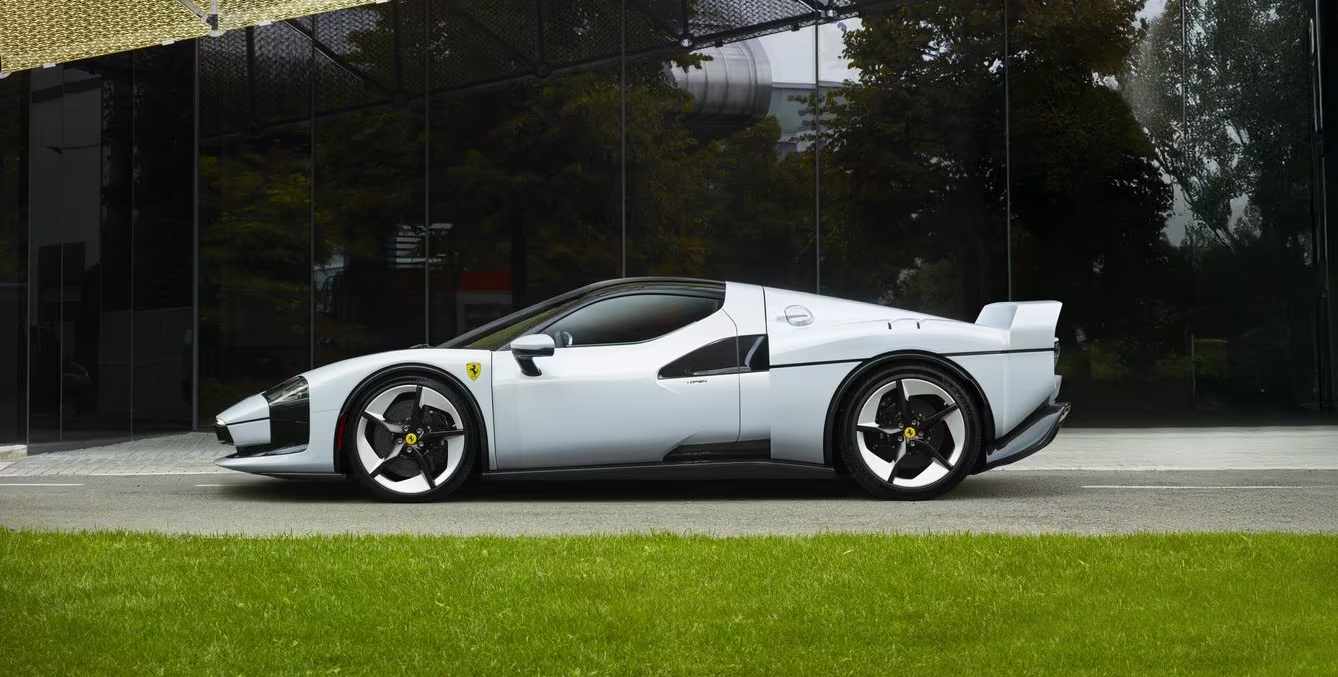
    Exterior Design: Sculpted Aerodynamics with Artistic Precision

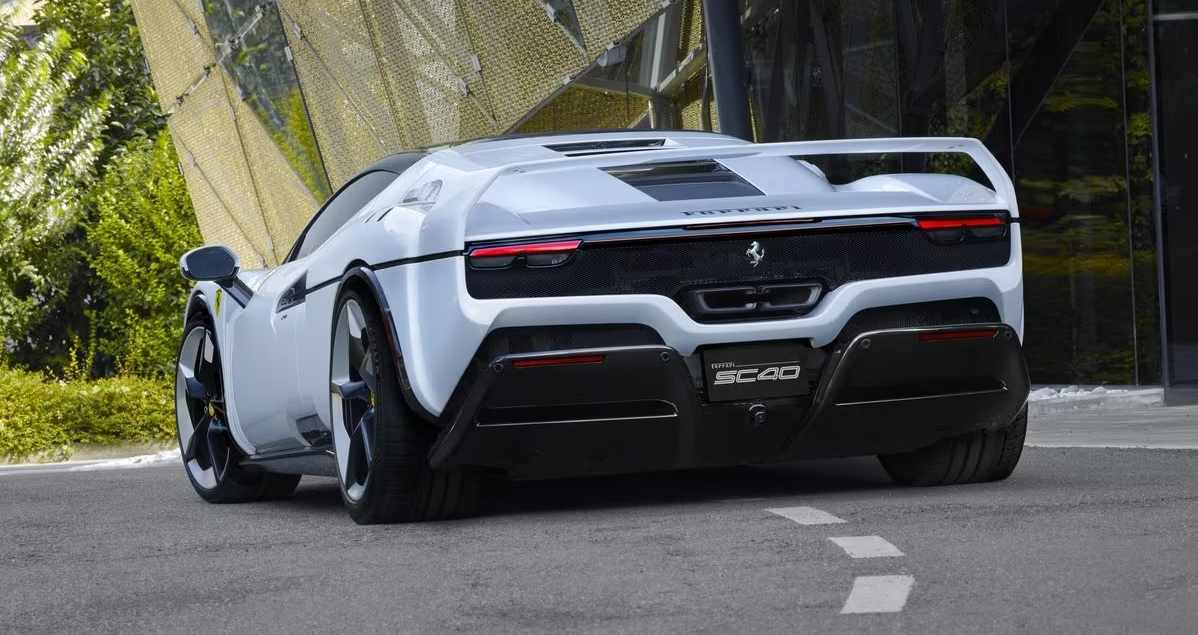
    The Ferrari SC40 features a completely bespoke body — every line, vent, and surface purpose-built to blend form and function. The embossed “SC40” lettering on the side panel serves as a respectful tribute to the F40, while the car’s stance asserts its own modern personality.

    Key design elements include:

    • High fixed rear wing, emerging vertically from the engine cover and intersected by a black separation line, giving the car a commanding rear profile.
    • Smoked Lexan® louvers, offering a view of the V6 hybrid powertrain while integrating seamlessly into the aerodynamic flow.
    • Central titanium and carbon-fiber exhaust outlets, surrounded by redesigned LED taillights that echo the visual identity of the 296 GTB.
    • Reinterpreted NACA ducts on the sides, enhancing airflow efficiency while preserving the spirit of the original F40’s bodywork.
    • Aggressive front intakes and new brake cooling channels, emphasizing downforce and muscular design.

    The overall result is a sculpture on wheels — a pure expression of Ferrari’s aerodynamic artistry.


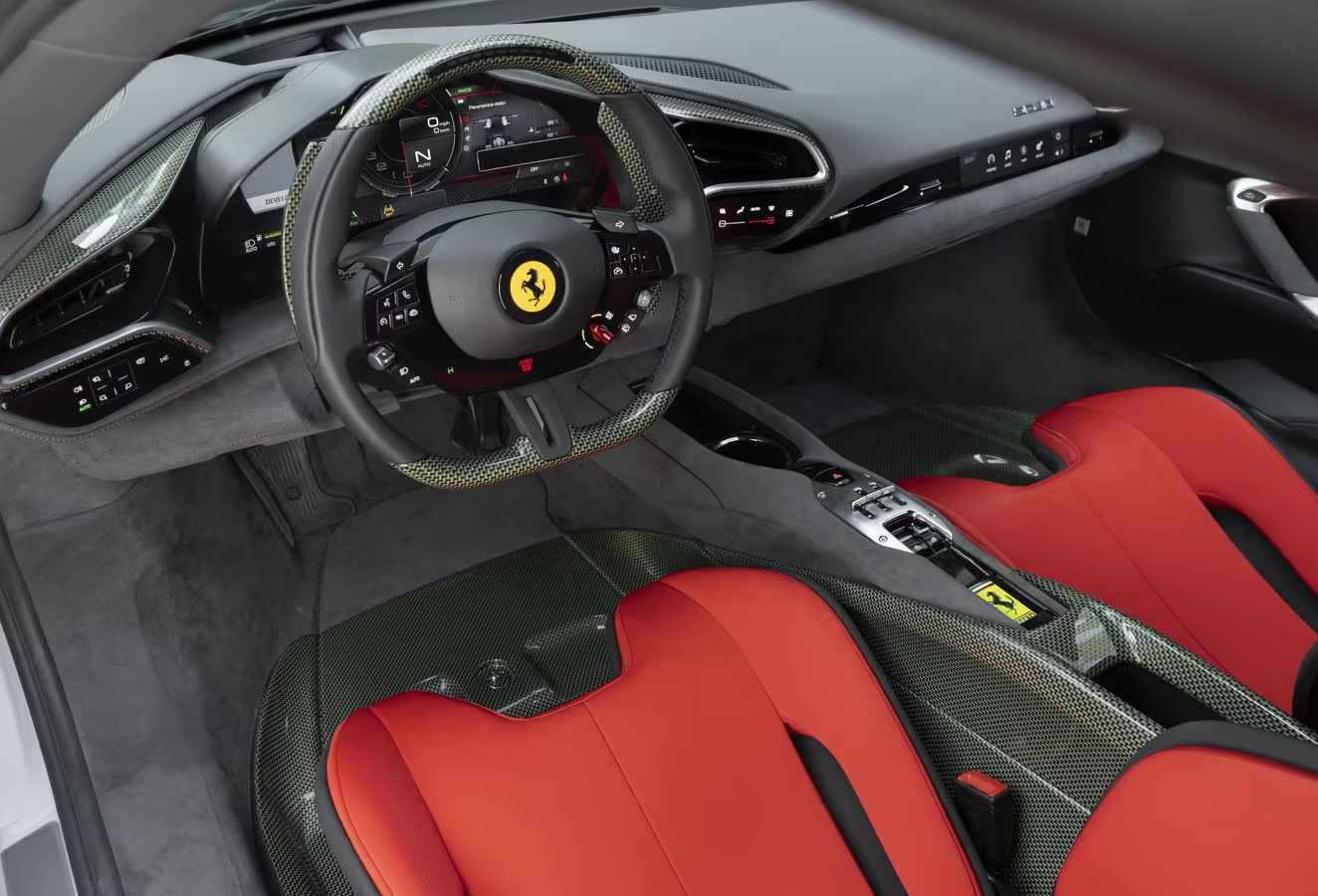
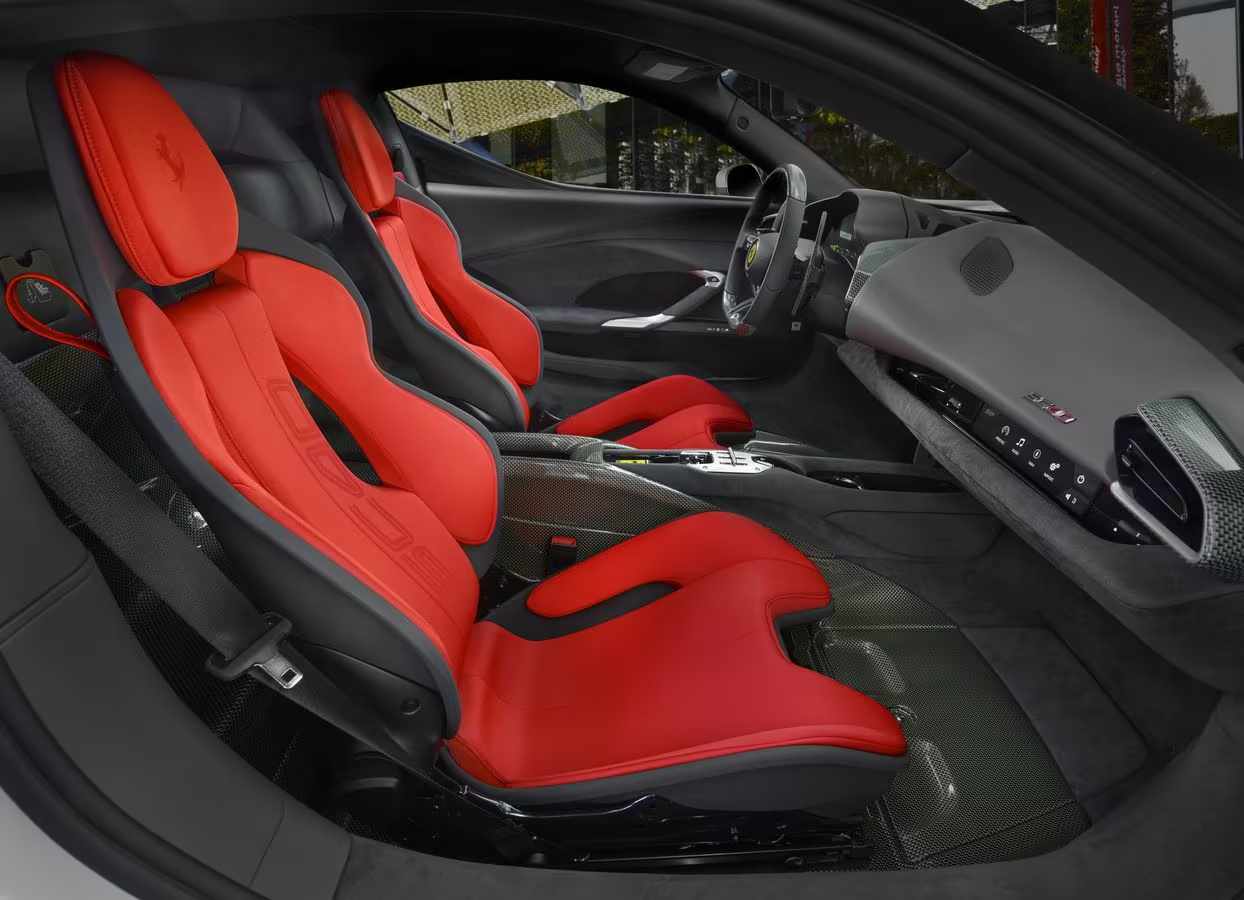
    Interior: Minimalism and Kevlar Heritage

    Inside, the SC40’s cabin exudes the same race-bred minimalism that made the F40 an icon. The cockpit is a fusion of retro cues and modern craftsmanship, defined by the extensive use of carbon-Kevlar composite materials throughout the footwells, seat backs, floor mats, and engine bulkhead.

    The dark charcoal Alcantara® upholstery is contrasted with red jacquard inserts, while the embroidered Prancing Horse on the headrests and woven SC40 badges elevate the sense of exclusivity.

    Ferrari’s bespoke paint finish, SC40 White, highlights the car’s sculpted contours and subtly mirrors the Kevlar tones of the interior. Details such as the brushed aluminum fuel cap and charging port lid underscore the obsessive attention to craftsmanship that defines Ferrari’s One-Off program.


    Powertrain: Hybrid Muscle Beyond the F40

    Under its stunning bodywork, the SC40 channels Ferrari’s latest hybrid technology — blending the past and future of performance. Based on the 296 GTB platform, it combines a 3.0-liter twin-turbo V6 engine with an electric motor to produce an astonishing 830 hp (610 kW) and 740 Nm of torque.

    Performance figures confirm that this one-off masterpiece surpasses its spiritual ancestor in every measurable way:

    Performance MetricSC40F40 (1987)
    Total Power830 hp478 hp
    0–100 km/h2.9 s4.1 s
    0–200 km/h7.3 s12.0 s
    Top Speed330+ km/h324 km/h

    Where the F40’s raw twin-turbo V8 once symbolized peak performance, the SC40 demonstrates how far Ferrari’s hybrid evolution has progressed — faster, more efficient, and still uncompromisingly emotional.


    Ferrari’s “Special Projects” Legacy

    The Special Projects initiative represents the highest level of Ferrari’s personalization expertise. Each creation takes approximately two years from concept to delivery, involving the client in every stage — from design sketches to final assembly. The result is a truly bespoke masterpiece, destined to remain one-of-a-kind forever.

    In the case of the SC40, Ferrari has once again succeeded in translating a collector’s vision into a rolling work of art — a machine that honors the past while celebrating the technological possibilities of the future.

    Starting October 18, the original SC40 design sketches will be displayed at the Ferrari Museum in Maranello, allowing enthusiasts to admire one of the most extraordinary examples of modern automotive craftsmanship up close.


    Piston Kafalar Comment

    The Ferrari SC40 is not just a one-off supercar; it is a statement of lineage. It bridges 40 years of innovation, reinterpreting one of the most important Ferraris ever built through the lens of contemporary engineering. From its carbon-Kevlar cabin to its hybrid heart, the SC40 represents the perfect fusion of emotion, exclusivity, and evolution.

    In an era where electrification often dilutes character, Ferrari proves once again that passion and performance can coexist — perhaps even flourish — in the hybrid age.

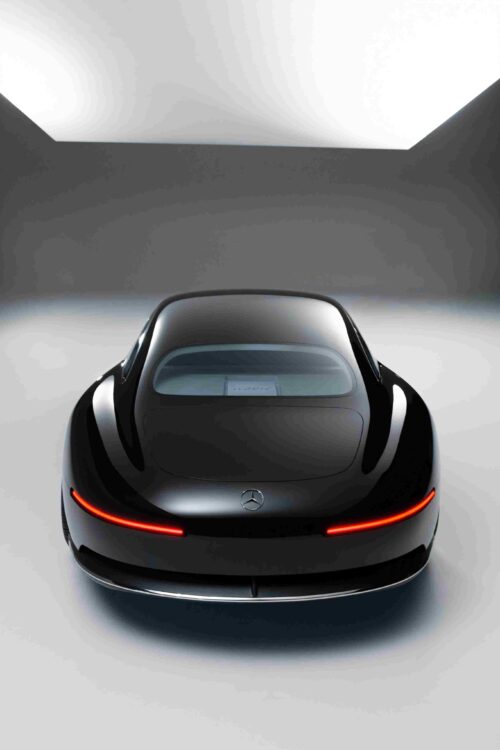
  • Mercedes Blends Classic Elegance with Future Tech: Vision Iconic Concept Unveiled

    Mercedes Blends Classic Elegance with Future Tech: Vision Iconic Concept Unveiled

    Mercedes showcases the Vision Iconic concept, merging Art Deco elegance with solar paint, neuromorphic computing, and Level 4 autonomy.

    Mercedes Blends Classic Elegance with Future Tech: Vision Iconic Concept Unveiled

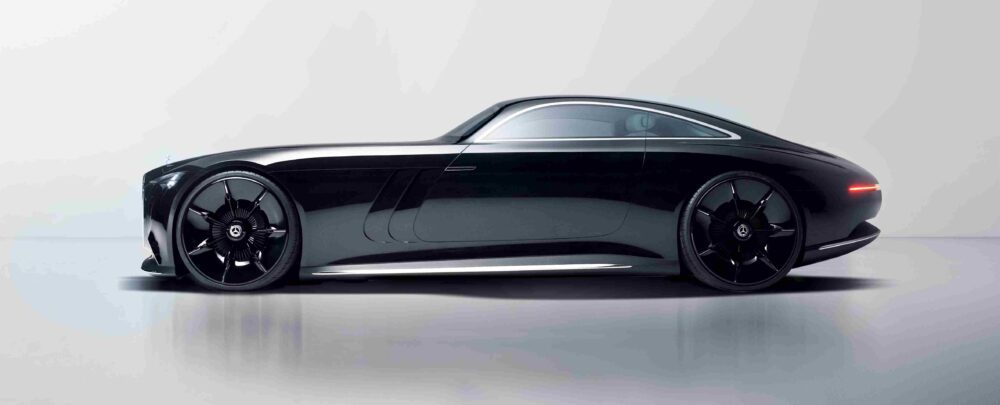
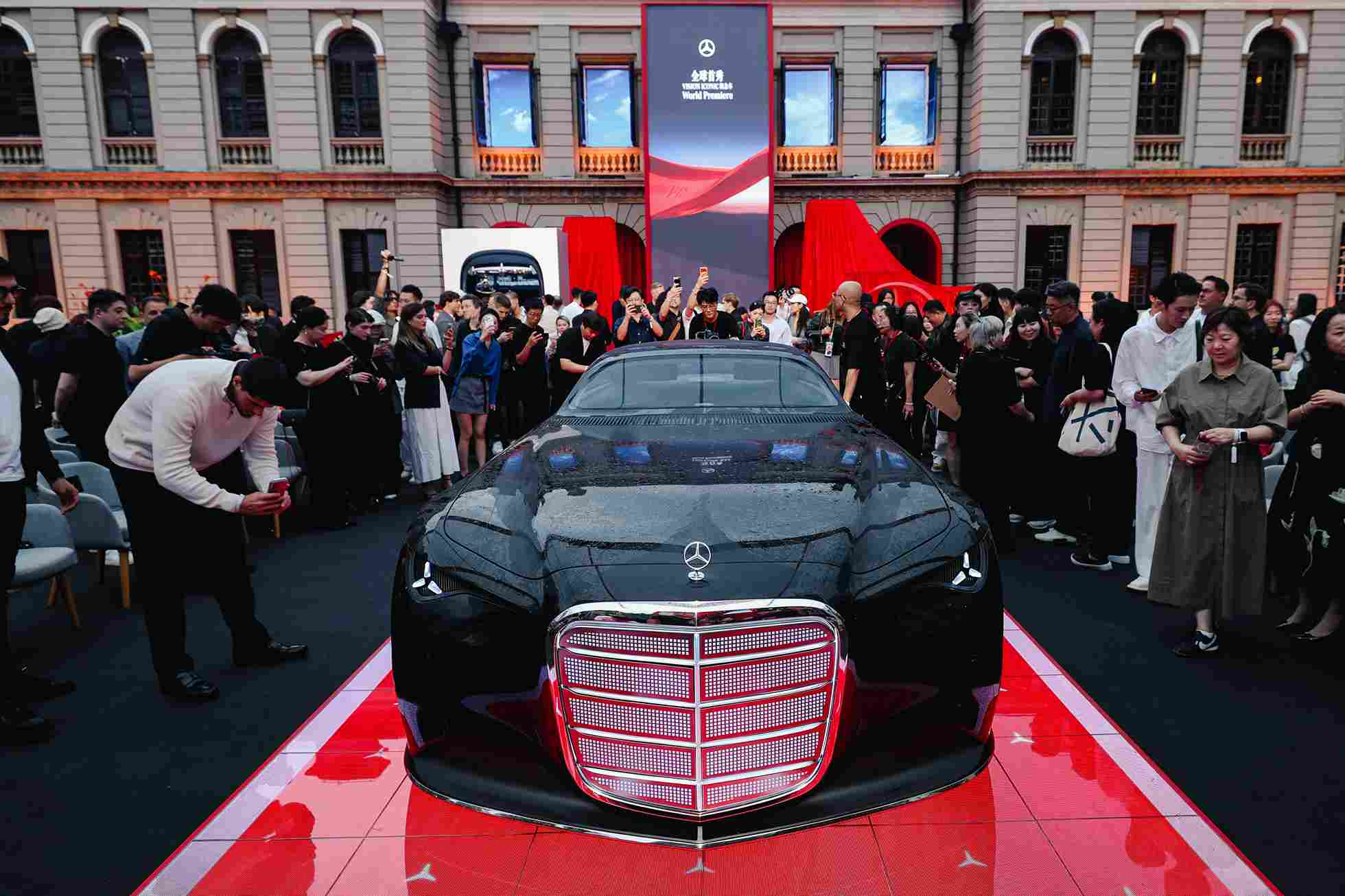
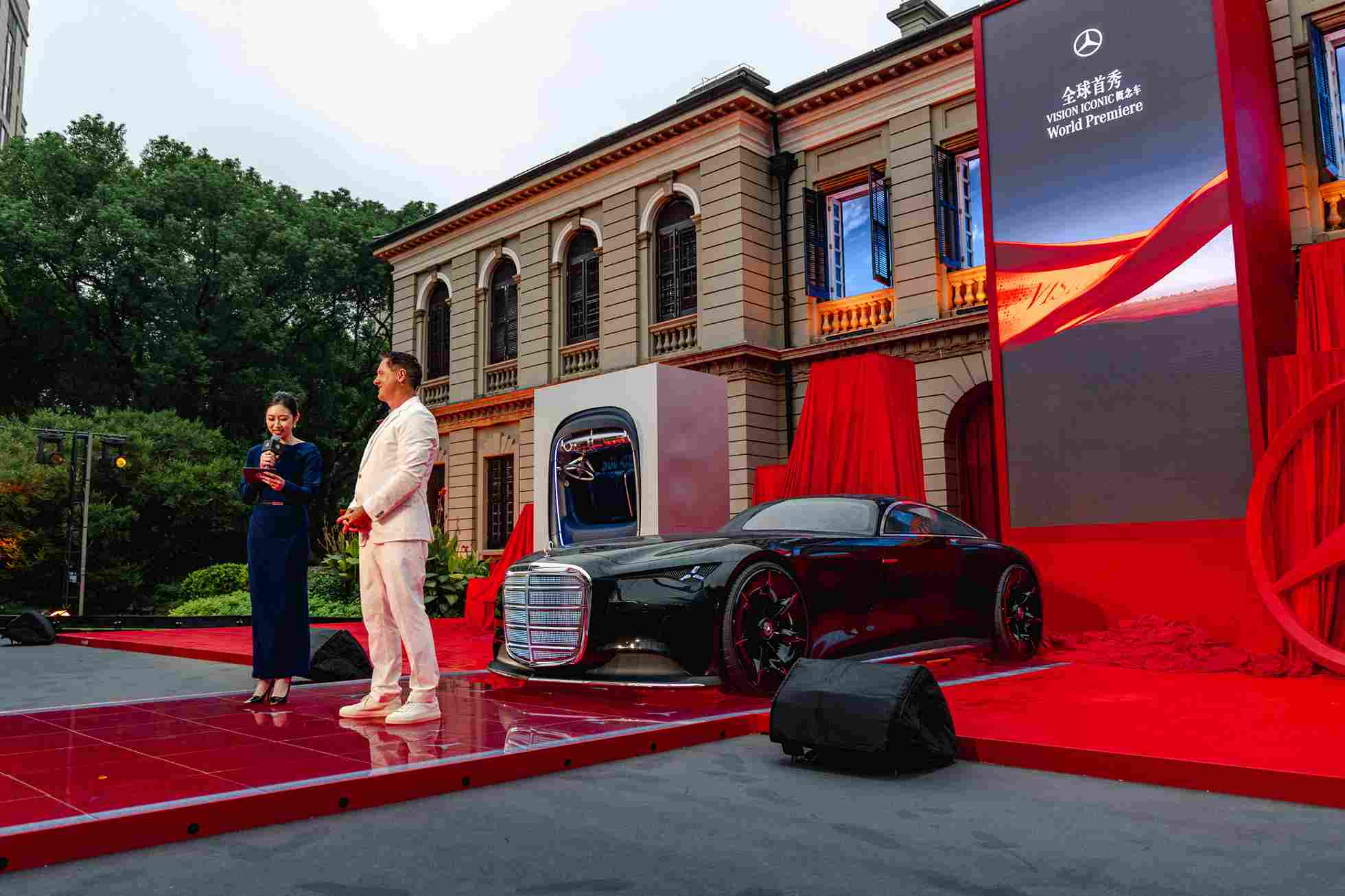
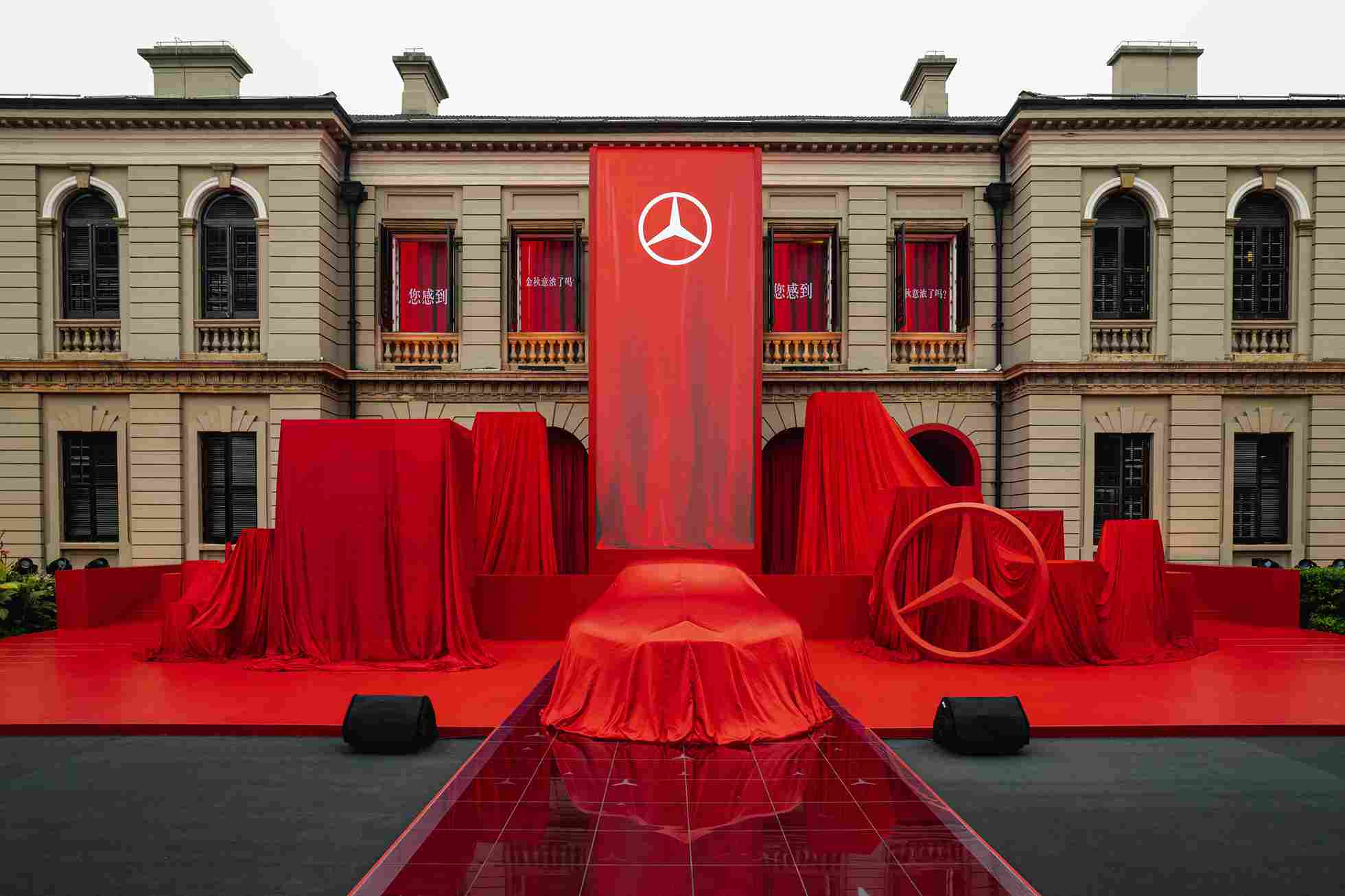
    Mercedes-Benz has officially revealed the Vision Iconic concept, a striking fusion of the brand’s timeless design heritage and cutting-edge automotive innovation. Unveiled alongside Shanghai Fashion Week, the Vision Iconic isn’t just a concept car — it’s a bold statement redefining the future of mobility, blending technology, sustainability, and emotion in one sculptural creation.

    A New Era of Iconic Design: Digital, Illuminated and Emotional

    At the heart of the Vision Iconic’s identity lies a reimagined version of one of Mercedes’ most defining design elements: the iconic chrome grille. Inspired by legendary classics like the W108 and Mercedes 600 Pullman, the new “Iconic Grille” features illuminated star badging, animated lighting patterns, and a smoked-glass lattice structure — transforming a historic symbol into a futuristic digital signature.

    Art Deco Meets AI: A Cabin of Luxury and Intelligence

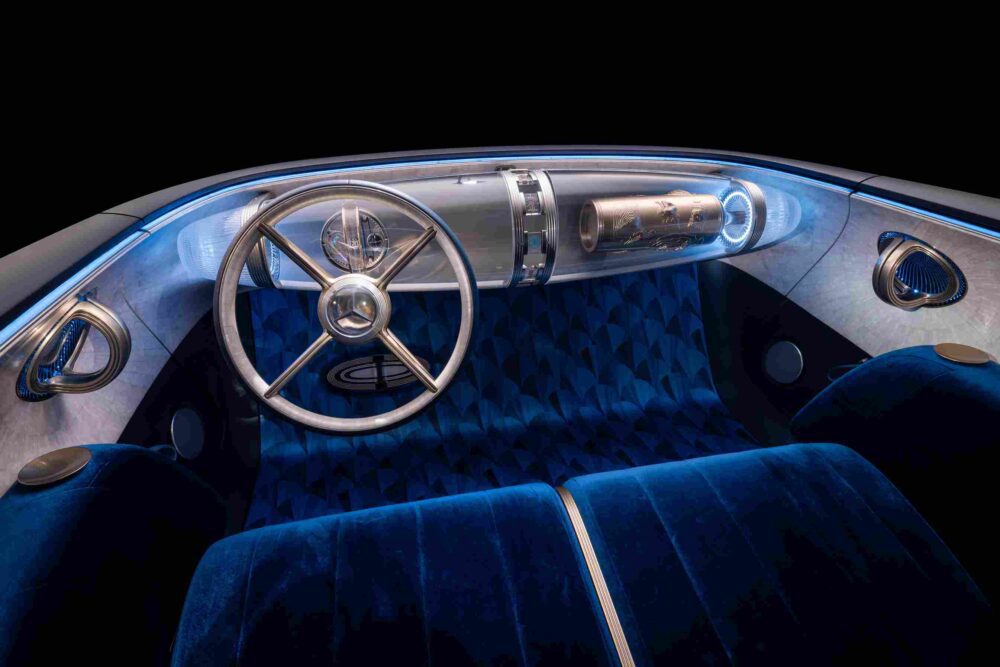
    Inside, Vision Iconic is an immersive blend of Art Deco elegance and next-generation technology. A cinematic instrument cluster animation greets occupants, while a bespoke AI-powered driver companion is integrated into the dash, even mimicking the shape of the Mercedes star.

    Rich materials — from deep blue velvet seats to 17th-century-inspired straw marquetry on the floor — turn the cabin into a moving luxury lounge. A floating glass “Zeppelin” display and a brand-logo-shaped clock add visual drama, while a handcrafted glass sphere steering wheel sits as the centerpiece of the driver’s environment.

    Solar Paint Adds Up to 12,000 km of Range

    One of the Vision Iconic’s most remarkable innovations is its photovoltaic-active solar coating, seamlessly integrated into the bodywork. With just 11 m² of solar surface, the system can generate enough power for up to 12,000 km of additional range annually, depending on sunlight exposure. The coating is free of rare earth materials, fully recyclable, and achieves an impressive 20% efficiency.

    Neuromorphic Computing: The Brain Behind Autonomous Driving

    Mercedes is pushing the boundaries of autonomous driving with neuromorphic computing — a revolutionary processor architecture inspired by the human brain. This technology processes environmental data faster and more efficiently, improving object recognition and reaction times even in poor visibility. Compared to traditional systems, it can cut energy usage by up to 90%.
    Level 4 Autonomy and Steer-by-Wire: The Future of Driving Experience

    Equipped with Level 4 autonomous driving, Vision Iconic can handle urban traffic, highway cruising, and even self-parking without driver intervention. Inside, passengers can relax, stream content, or even take a nap during the journey.

    The steer-by-wire system eliminates the mechanical link between the steering wheel and front wheels, enhancing agility, reducing steering effort, and offering greater freedom for interior design.

    Automotive Meets Fashion: The Vision Iconic Capsule Collection

    To celebrate the debut, Mercedes-Benz also unveiled a six-piece Vision Iconic Capsule Collection. The fashion line mirrors the vehicle’s interior palette with deep blue hues, gold accents, and Art Deco motifs, bridging the worlds of haute couture and high-performance engineering.

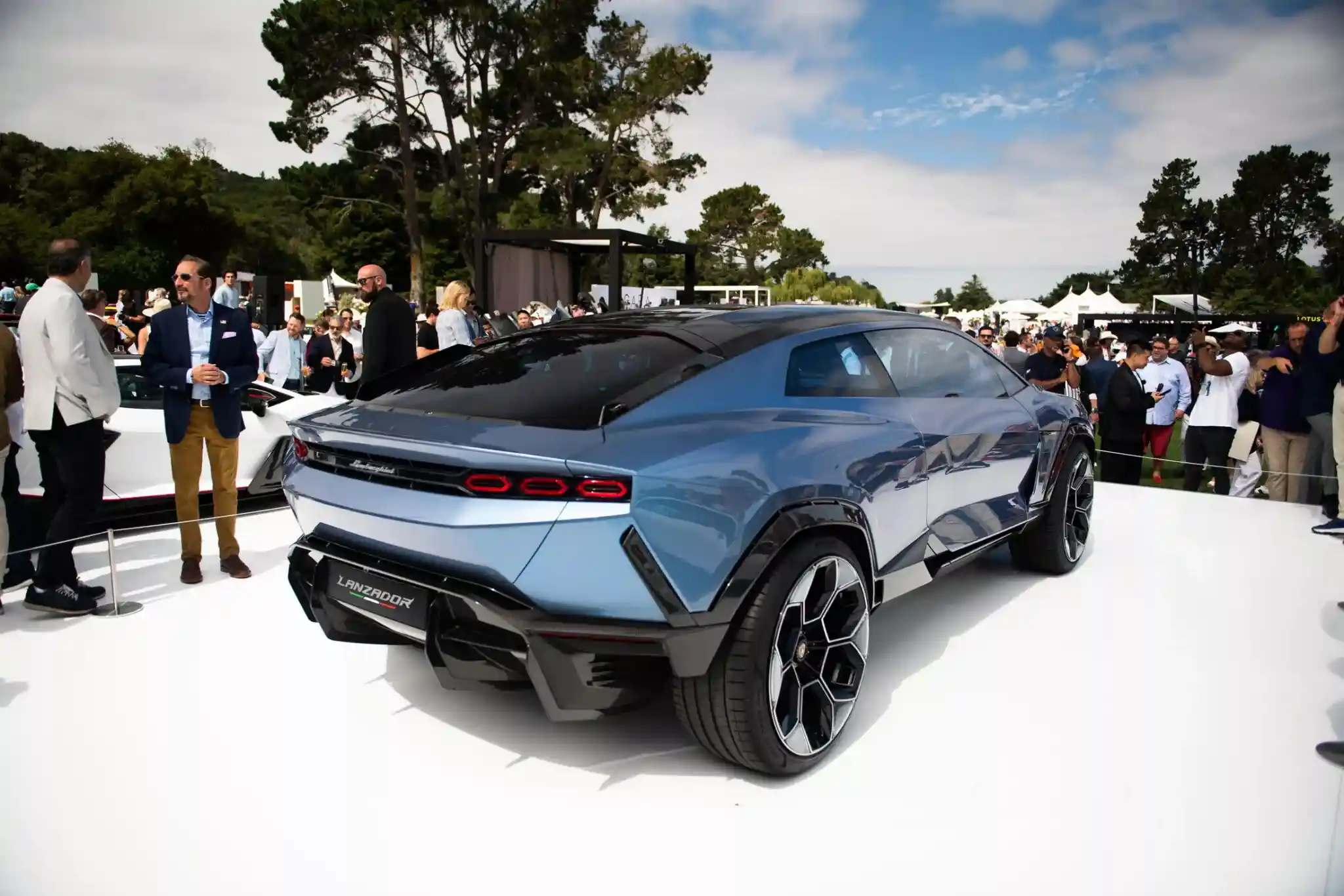
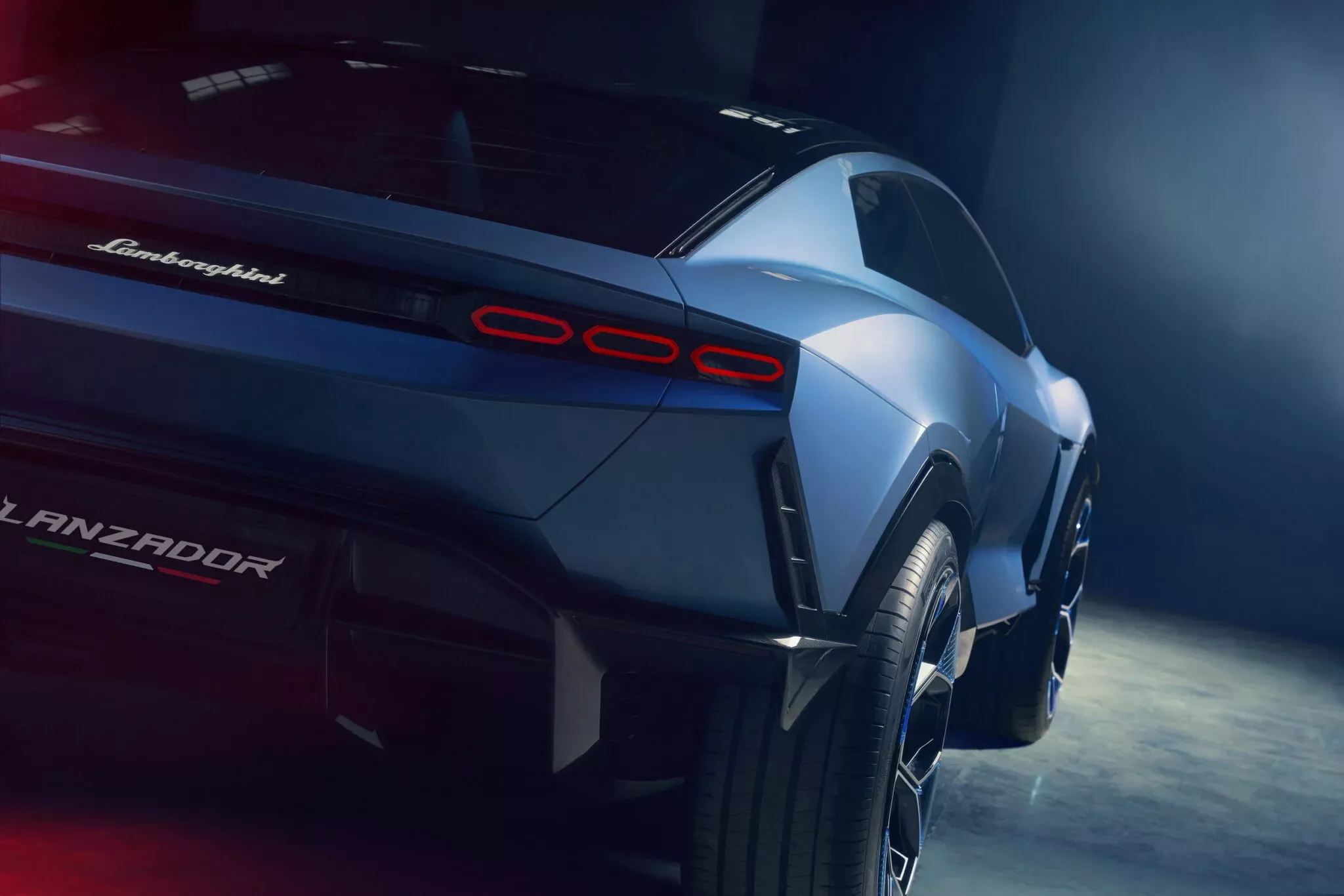
  • Urus Paves the Way, But the Big Question Remains: Will the Lanzador Go PHEV or EV?

    Urus Paves the Way, But the Big Question Remains: Will the Lanzador Go PHEV or EV?

    Lamborghini is preparing to make a pivotal decision on the Lanzador — its first-ever 2+2 GT and potentially its first all-electric model. Will it go fully EV or opt for a PHEV? Here’s why the decision matters for the future of Sant’Agata.

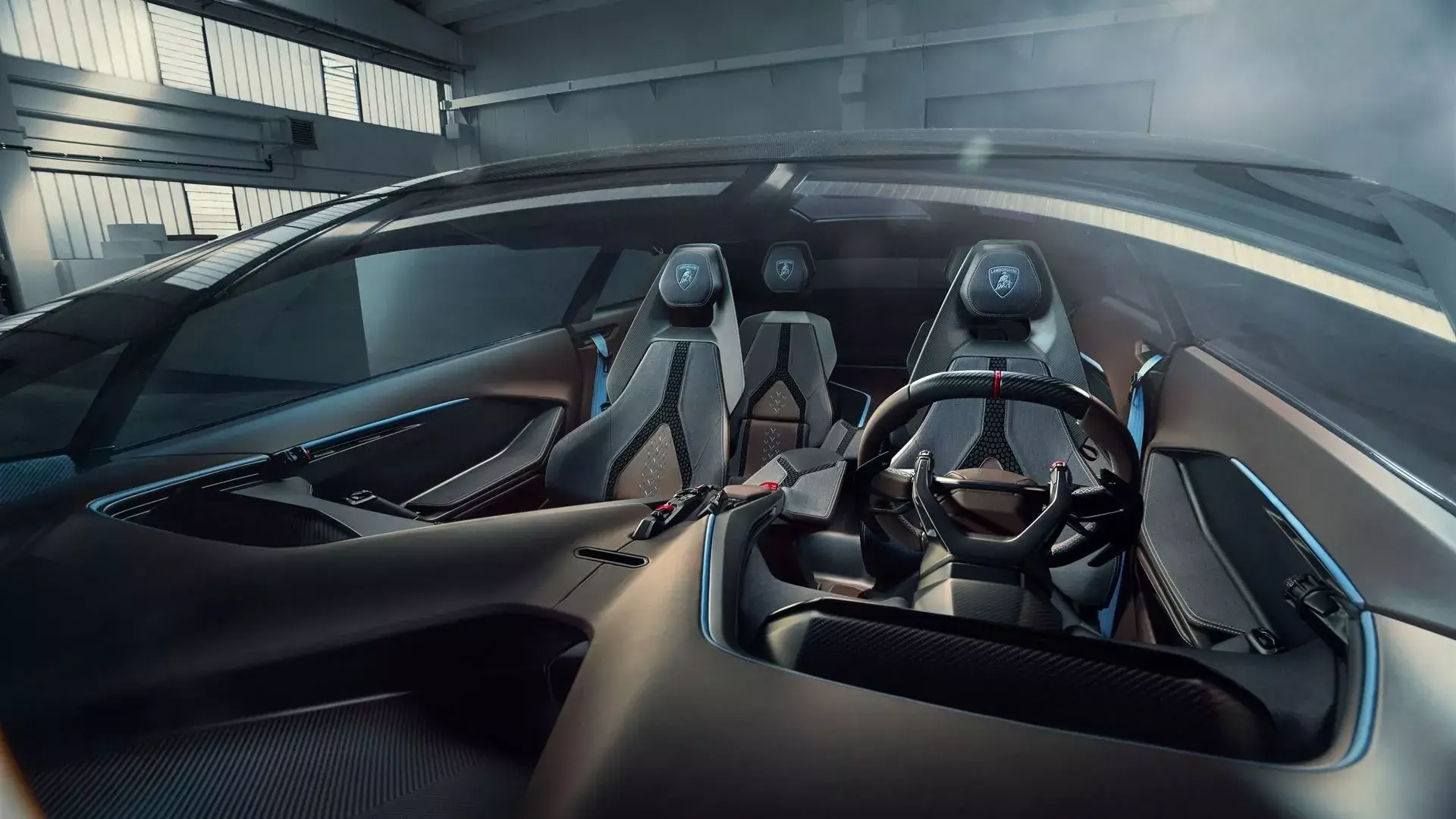
    Lamborghini is standing at a pivotal crossroads in its electrification journey. After confirming that the next-generation Urus will transition to a plug-in hybrid (PHEV) rather than a fully electric powertrain, the Italian brand’s next major decision focuses on its long-awaited Lanzador — a 2+2 GT that will either become Lamborghini’s first all-electric model or follow the Urus with a PHEV setup. According to CEO Stephan Winkelmann, the verdict is expected within weeks, a decision that could define the company’s electrified future well into the 2030s.


    A Strategic Pause: Why the Future of Lanzador Is Uncertain

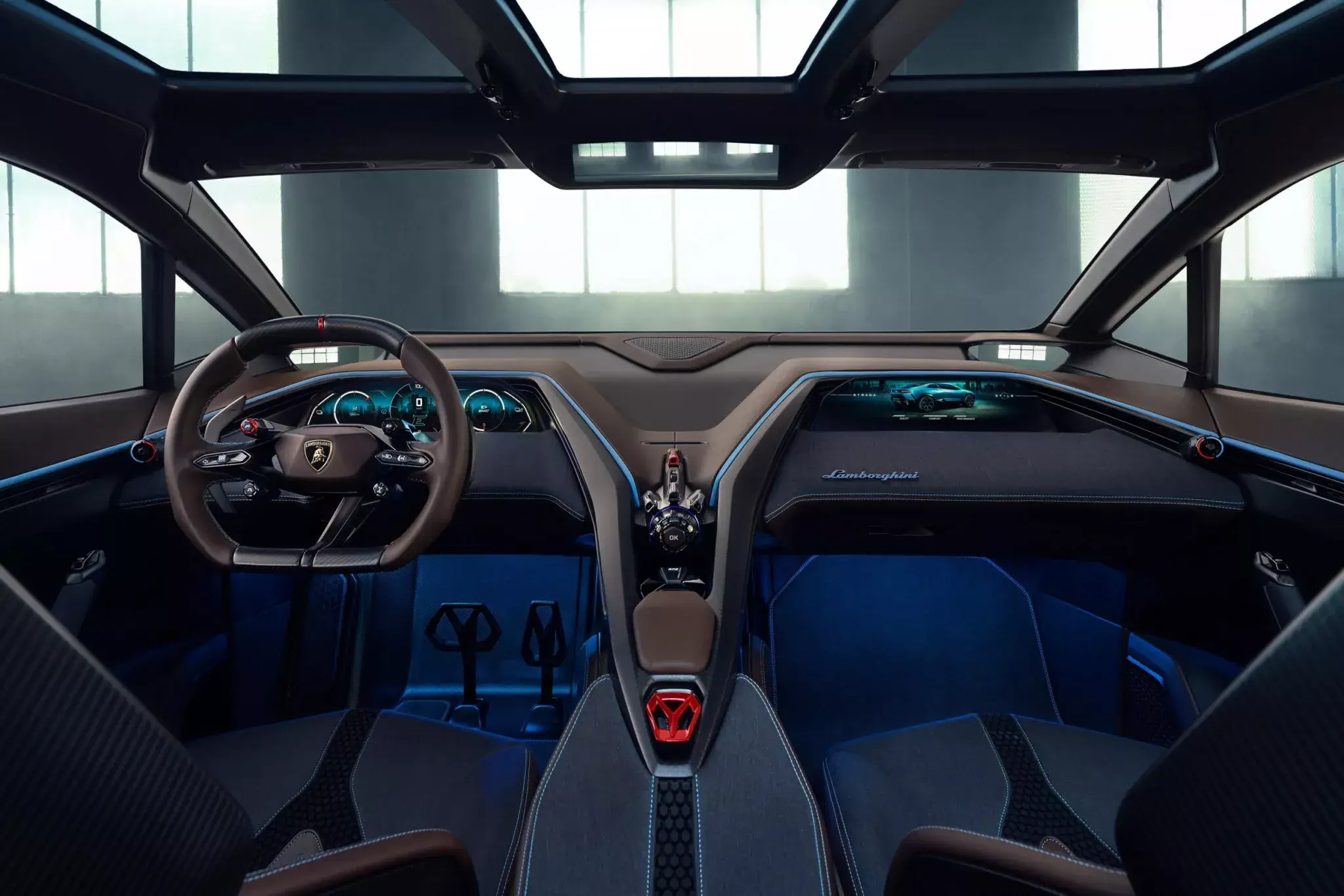
    When Lamborghini unveiled the Lanzador concept in 2023, it was introduced as a bold statement — the company’s first battery-electric model and a symbol of its future beyond internal combustion. At the time, it promised cutting-edge 980-volt technology and over 1 megawatt (1,340+ hp) from dual electric motors, wrapped in a futuristic 2+2 GT body inspired by the Urus SUV and Huracán Sterrato.

    But the automotive landscape has shifted since then. Global demand for high-end electric sports cars has cooled, and Lamborghini’s own customer base is signaling hesitation. “It’s not important what you can achieve with technology — it’s about what the customer wants,” Winkelmann explained. “And right now, our customers don’t see battery-electric vehicles as a real alternative.”

    The slowdown in luxury EV adoption, coupled with ongoing development delays at parent company Volkswagen Group and sister brand Porsche, has forced Lamborghini to rethink its timeline. A plug-in hybrid powertrain — blending a twin-turbo V8 with electric assistance — could offer a more market-ready solution while still meeting tightening emissions regulations.


    A Broader Electrification Strategy: Flexibility Over Ideology

    Lamborghini’s pivot is not an isolated decision. The brand’s broader strategy emphasizes flexibility rather than rushing into full electrification. While competitors like Ferrari prepare to launch their first EV, Lamborghini prefers to pace its transition, ensuring that future models remain true to the brand’s core values of performance, drama, and emotion.

    This approach aligns with Winkelmann’s long-term vision. “We will continue with the V12 after 2030,” he confirmed, referencing the naturally aspirated powerplant found in the Revuelto. Additionally, Lamborghini is investing heavily in alternative fuels — including biofuels that can reduce the carbon footprint of existing combustion engines — to keep iconic models relevant in a low-emissions future.

    Global regulatory uncertainty is another key factor. With emissions standards diverging across regions — from Euro 7 in Europe to varying U.S. EPA requirements — Lamborghini must ensure that its powertrains can comply worldwide. “We need commonality across markets,” Winkelmann emphasized. “It’s becoming more fragmented, and we must stay flexible and alert.”


    Engineering Ambition: One Megawatt and Beyond

    Regardless of the final powertrain choice, Lamborghini promises the Lanzador will be a technological showcase. The concept previewed an output of over 1 MW, translating to more than 1,340 horsepower, and the production version is expected to meet — or even exceed — that benchmark. Repeated acceleration, top speed, and long-range capability will all be top priorities, with a likely battery capacity exceeding 100 kWh for the EV version.

    If the PHEV route is chosen, expect the Temerario and Urus SE hybrid systems to serve as the foundation — both pairing a twin-turbo V8 with electric motors for instant torque and improved efficiency. Such a setup would allow Lamborghini to offer a thrilling driving experience while easing range anxiety and charging concerns that still plague the EV segment.


    Dynamics, Aerodynamics, and Driving Emotion

    Lamborghini’s engineering team, led by CTO Rouven Mohr, is determined to ensure that electrification enhances rather than dilutes the brand’s legendary driving feel. The Lamborghini Dinamica Veicolo Integrata (LDVI) system — an advanced dynamic control platform — will be central to this mission, seamlessly coordinating sensors, actuators, and drive systems to deliver precise handling and responsiveness.

    Mohr believes electrification opens up new possibilities. “We can do things with electric powertrains that are impossible with combustion engines,” he explained. This includes ultra-fine control of wheel speed and torque distribution, which can dramatically improve agility and stability.
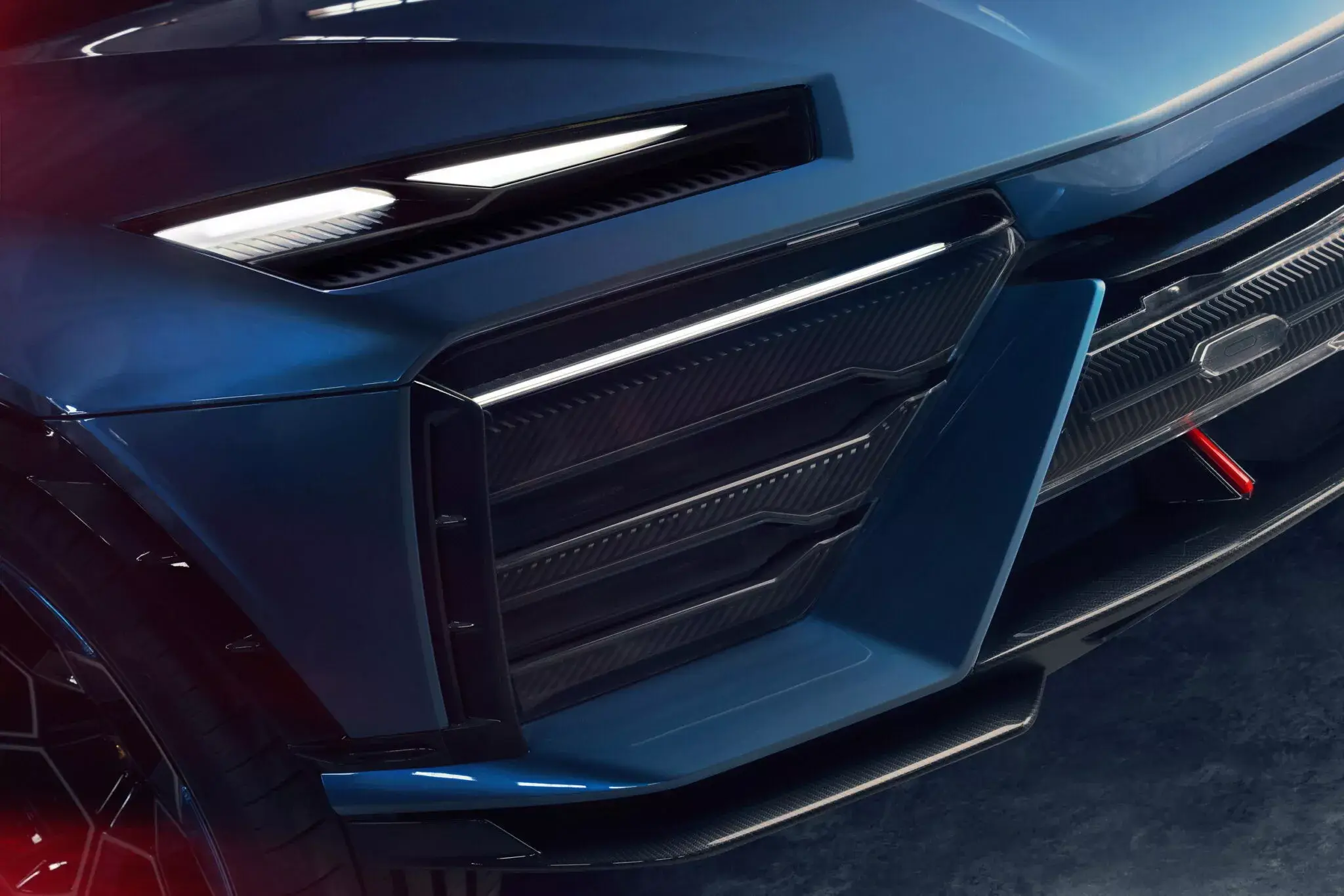
    The Lanzador will also benefit from active aerodynamics derived from the Huracán Performante and Aventador SVJ. Its innovative “downforce without drag” system — using strategically placed vents, louvers, and a blown diffuser — is designed to optimize grip without compromising efficiency, while advanced battery cooling solutions will ensure repeatable performance under demanding conditions.


    Design Evolution: A Clean Future with Italian Soul

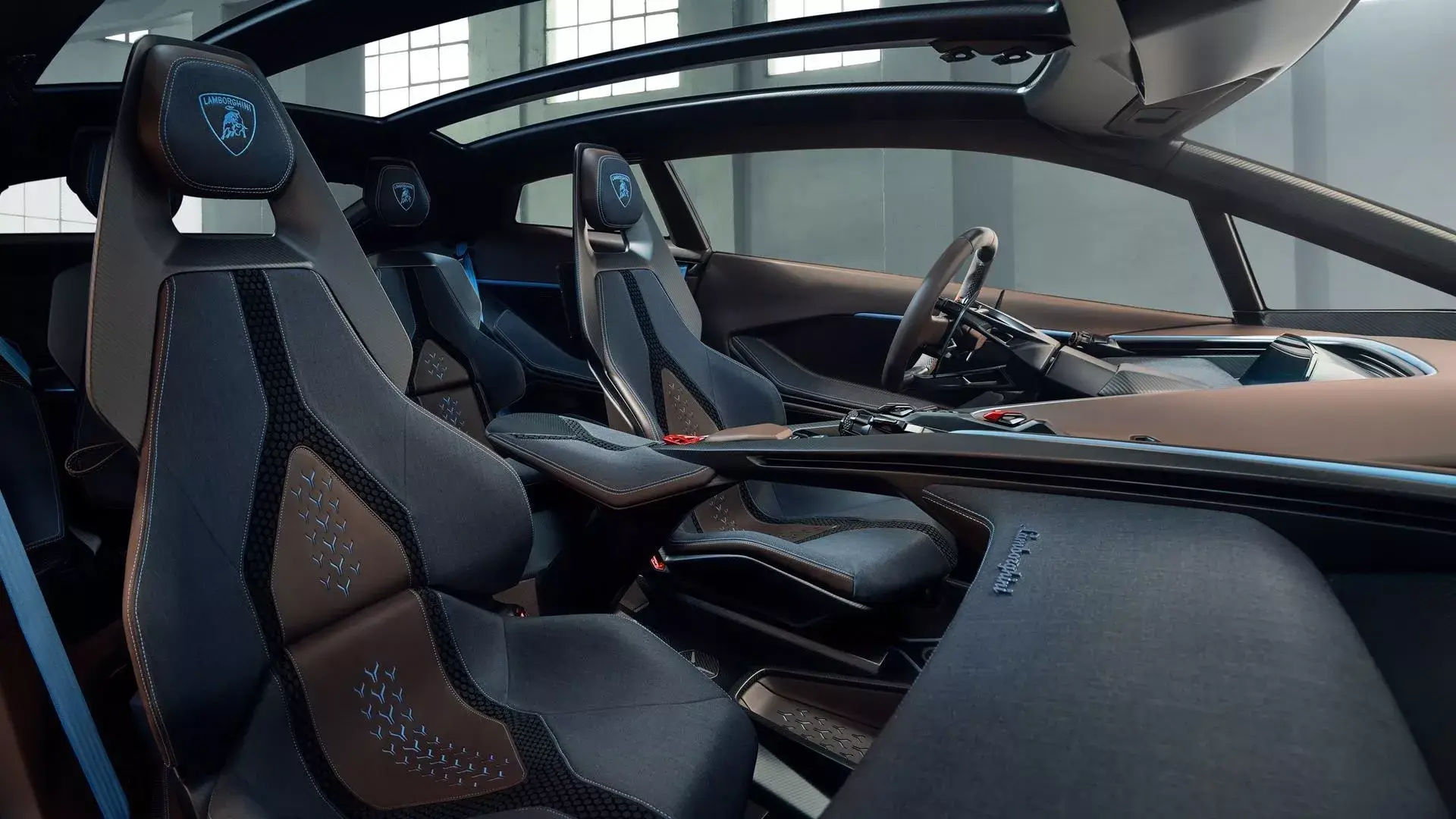
    Design remains a crucial pillar of Lamborghini’s identity, and the Lanzador will introduce a new visual language for the brand’s next era. Chief designer Mitja Borkert is pursuing a “clean design” philosophy — balancing futuristic cues with instantly recognizable Lamborghini DNA. The Lanzador’s silhouette will evolve beyond the concept’s original form, likely adopting a more mature and aerodynamic shape.

    Inside, Lamborghini plans to embrace sustainable materials without sacrificing luxury. Merino wool, eco-tanned leather using recycled water, and 3D-printed recycled fibers will all feature prominently. Even the seat foam will incorporate regenerated carbon materials, reflecting Lamborghini’s commitment to a more circular production process.


    Market Position: A Different Kind of Super GT

    The Lanzador is not designed to compete with ultra-high-performance EVs like the Rimac Nevera. Instead, it aims to offer everyday usability with supercar performance, targeting a niche of buyers who want electrified performance without compromising the emotional experience. With air suspension, rear-wheel steering, and a target weight lower than most hybrids in its class, Lamborghini promises the Lanzador will deliver agility worthy of its badge.

    While the car’s official launch isn’t expected until 2028, its importance to Lamborghini’s future cannot be overstated. More than just a new model, the Lanzador represents a philosophical shift — one that balances tradition with transformation.


    The Road Ahead: A Defining Decision

    Lamborghini’s choice between EV and PHEV powertrains will resonate far beyond the Lanzador itself. It will signal how one of the world’s most iconic performance brands plans to navigate the next decade — not by chasing trends, but by shaping them on its own terms.

    As Winkelmann puts it, “We could build a BEV today. But delivering a car that truly embodies what Lamborghini stands for — in performance, emotion, and experience — requires more than technology. It requires timing.”

    And that timing is now.